EN
EN

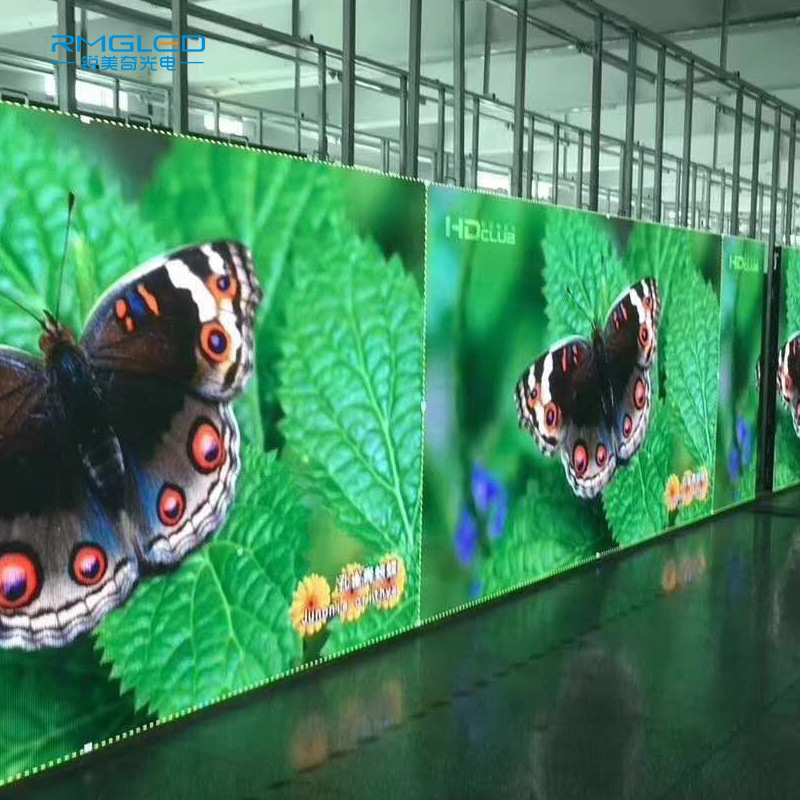
The Relationship Between Pixel Pitch, Human Visual Acuity and Clarity of LED Display Panels
The Relationship Between Pixel Pitch And Distance
Pixel pitch is defined as the distance between LED pixels, measured in millimeters. Smaller pixel pitch means more pixels are placed in the same area. This means that images will look more defined when the user is relatively close to the display, say three meters or less. The human eye has a limit of what detail we can see. If a display has pixels that are larger than that limit, the viewer will see individual pixels as opposed to a seamless image. This illustrates the concept of pixelation.
With normal 20/20 vision, the human eye can distinguish details spaced 1 arcminute apart. Using this as a criteria, a P1.5mm display's pixels can be distinguished from a distance of 2.4 meters, whereas for a P3.0mm panel, that distance is 4.8 meters. Thus, finer pixel pitch allows closer viewing distances without compromising detail. This is especially important for immersive or interactive displays.
Pixel Pitch Implementation Example Minimum Distance for Comfortable Viewing
P0.9–P1.2mm Control rooms, broadcast studios 0.9 meters
P2.5–P3.0mm Outdoor advertising, event venues 3 meters
Why 20/20 Vision Sets the Baseline for LED Display Panel Legibility
20/20 vision is the average vision that most people are equipped with the ability to discern detail that is 1 arcminute separated at a distance of 20 feet (approximately 6 meters). Display engineers use this benchmark for designing LED screens. A display design engineer determines the distance between pixels (or the distance of the individual LED lights) such that they appear to disappear when viewed from the distance they are designed for. Consider a display designed for a distance of 3 meters. If the distance between individual LED lights is greater than 4.8mm, even a person with a perfect vision will begin to see individual LED lights instead of a continuous image on the display. Additionally, displays with pixel spacings of less than 1mm are common in TV studio control rooms because the technicians who work in this environment require extremely high resolution displays with no visible pixel structure, scan lines, or other display artifacts.
Practical Estimation of Optimal Viewing Distances for LED Display Panels
Understanding the 10x Rule: When Does this Apply to LED Display Panels?
Quickly estimating the 10x rule works when you multiply the pixel pitch (in mm) to the closest foot. Example, for P3.0mm displays you would suggest ~30 feet (9 meters) as the closest viewing distance. This method works for most indoor environments with normal lighting, average visual acuity, and conditions.
In the following 3 situations, the method will not work:
1. Viewing high resolution P1.5 displays from less than 5 meters, the pixel density exceeds the human visual resolution.
2. Viewing outdoor displays. The ambient sunlight will reduce the contrast of the display and increase the graininess of the display.
3. Viewing oversized video walls from greater than 20 meters. The contrast of the display will reduce in brightness and the atmospheric scattering will reduce the display clarity.
Using the 10x method for the above scenarios can result in an under or over estimation of the optimal distance by over 40%. This clearly does not work for scenarios where precision is needed.
Calculating ACVD: Improvements with PPI and Snellen Standards
ACVD stands for Average Comfortable Viewing Distance and represents a positive step in integrating display tech with proven models of human vision. The main principles stem from the Snellen standard and the ISO 9241-300 ergonomic guidelines. The fundamental formula is:
ACVD (meters) = Pixel Pitch (mm) × 3.44
The above multiplier converts retinal cone spacing (1.5 mm at one meter) into actual viewing geometry. Note that to use ACVD correctly, you must:
Calculate PPI (Pixels Per Inch): PPI = 25.4 / Pixel Pitch (mm)
Use the ISO 9241-300 criteria for the appropriate thresholds of luminance, contrast, and viewing angle.
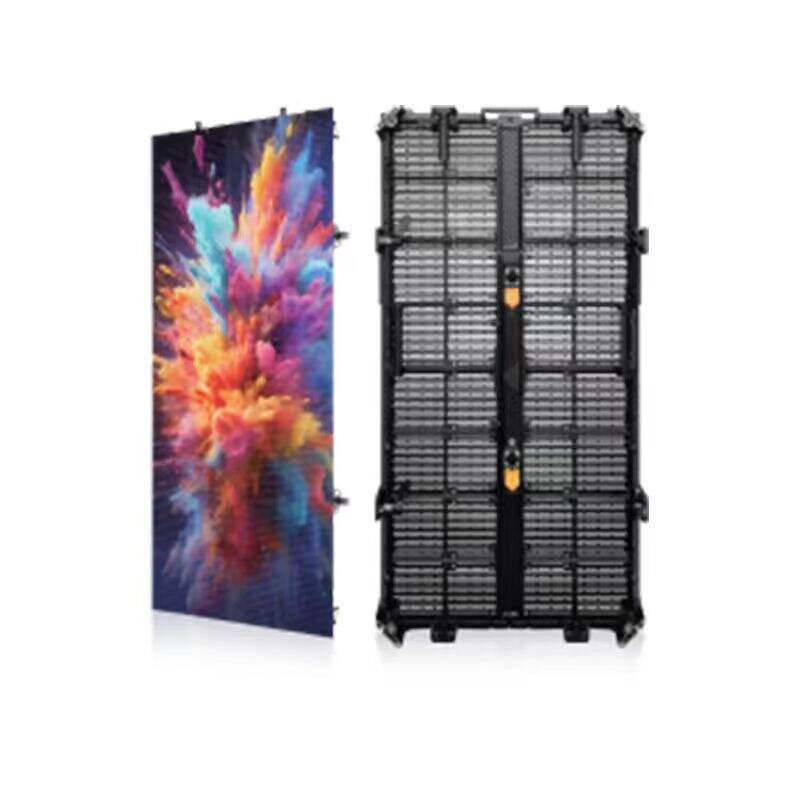
Use your content and context specific adjustment factor
ACVD is proof that the 10x rule is antiquated. ACVD reduces median distance viewing estimation error by 62% (Vision Research Metrics, 2023). ACVD does have limitations and is in regard to a standard 20/20 vision acuity and average contrast ratios of 5,000:1 (indoor) and 10,000:1 (outdoor). Furthermore, there must be a final on-site environmental adjustment to validate the ACVD.
Matching the Pixel Pitch of LED Display Panels to Operational Contexts and Environments
Selecting the appropriate pixel pitch requires a balance between the necessary resolution and the operational context. Pixel pitch selection involves the following considerations: the viewing distance to the display, the ambient lighting, the number of concurrent viewers, and of course, the budget. Pixel pitches no larger than 1.5mm are best for indoor environments where resolution and detail are most critical, like control rooms and television studio production spaces. Those environments are a little less than 5 meters from the units and there is a desire for every pixel to look perfect. In contrast, a display’s pixel pitch of 5mm or larger is ideal for outdoor displays. They are best for sporting event venues where spectators are more than 15 meters from the display. For these situations, a high pixel pitch is suitable because displays should not have the same super fine pixel pitch as indoor displays. The display should have high brightness to offset ambient sunlight and construction to resist water and snow.
In order for your LED display panel to provide clear, engaging visuals while protecting your investment and giving the display a long life, consider the ambient light conditions (i.e. direct sun vs. shaded) and anticipated dwell time.
Key Technical and Regulatory Considerations for LED Display Panel Selection
Standards regarding ergonomics and photobiological safety
When configuring a space that includes indoor LED displays, it is critical that IEC 62471 (Canadian Standards Association) and ISO 9241-300 (Ergonomics of Visual Display Terminals) are both complied with. According to ISO 9241-300, there are specific requirements for viewer comfort. Display screens must have a safe viewing angle of approximately +/- 30 degrees and +/- 20 degrees vertically. Negative flicker is also required in order to comply with the ISO standard. Displays must remain below 0.1% modulation depth in order to comply with the ISO standard. In order to comply with the standard, contrast must also be in compliance, so text must have a 10:1 ratio and videos must have a contrast of 50:1. If a display can be greater than 300 candela (cd) per square meter, it is required to have adaptive dimming. This is to ensure that uncomfortable glare does not occur and is especially important as the surrounding lighting changes throughout the day.
According to IEC 62471 standards, blue light levels below 100 watts per square meter per steradian, present a danger to people, and therefore, standards help with the photobiological safety of the public. Recent checks in 2023 examined approximately 120 different business locations and noted something interesting. Eye panels not certified eye complaints and light sensitivity reported almost 50% more than panels certified and compliance with the IEC standards. This shows that a true understanding of lighting standards, goes beyond, and includes the, concern and impact the design has on the human body. Employers who fit LED lighting in offices need to look beyond the numbers and consider the comfort and health of workers.
Balancing Outdoor Durability and Resolution: The Brightness, IP Rating, and Pixel Pitch Connection
The outdoor LED display market faces the challenge of balancing weatherproofing and display quality. Achieving brightness of greater than 5,000 nits (required to combat the sun's glare) is extremely difficult, and often require the manufacturer to make trade-offs. Larger LED, wider thermal dissipation gaps, and thicker protective coatings lead to reduced pixel pitch. More specifically, outdoor displays with 4mm pixel pitch can have up to 20% fewer pixels per inch than similar-sized indoor displays with 2mm pixel pitch. So, with the outdoors, tech specs don’t always do the trick.
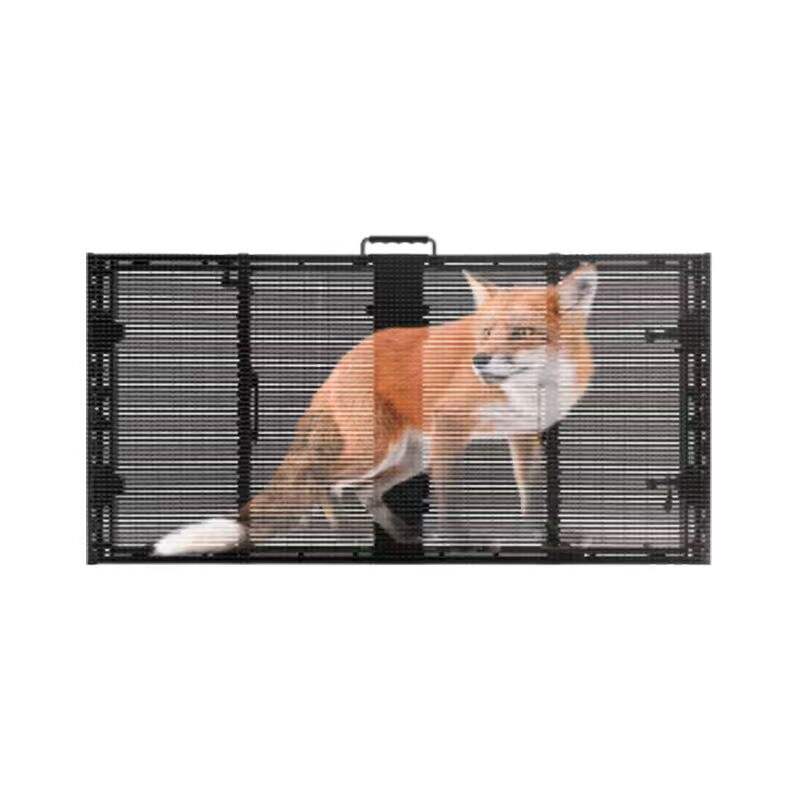
The Outdoors: IP Ratings and Protection Levels
Water Resistance: IP65 (protected against low-pressure water jets)
Dust Ingress: IP6X (complete particle barrier)
Thermal Tolerance: operational range of -40°C to +50°C
All of the above ultimately lead to larger pixel pitches, balanced against resolution through durability, and offering industrial billboards with 6 to 10mm pitches, and urban digital signage with 3-5mm pitches combined with active cooling and reinforced front-sealing - exemplifying clear and smart design.
FAQ Section
What does pixel pitch mean in LED displays?
Pixel pitch is the measurement (in millimeters) of the individual LEDs in the display. Smaller pixel pitch means that there are more LEDs, which causes the display to be sharper, and shows greater detail, especially when the display is closer to the viewer.
How does 20/20 vision influence the design of LED displays?
Designers create displays based on 20/20 vision so that they can be sure that pixels are close enough that they are not seen by people with 20/20 eyesight. If the LEDs are not close enough, people will be able to see the pixels, which will lose focus, and the image will be unclear.
What does the 10x rule refer to in LED displays?
The 10x rule is a measurement guideline that determines the minimum viewing distance by taking the display's pixel pitch, multiplying it by ten, and giving the distance in feet. The 10x rule works well in most indoor settings, but does not work well in those with high-resolution/great pixel density, and large outdoor displays.
What is ACVD and how does it help in estimating the viewing distance?
Average Comfortable Viewing Distance (ACVD) is a distance estimation based on display specifications and theories about the human's vision, and provides a more accurate estimation than the 10x rule. The ACVD estimation uses the pixel pitch, along with the PPI loss calculations, and contextual adjustment factors.