RMGLED 3D billboards feature high resolution, high contrast ratio, high waterproof level, and wide grayscale!
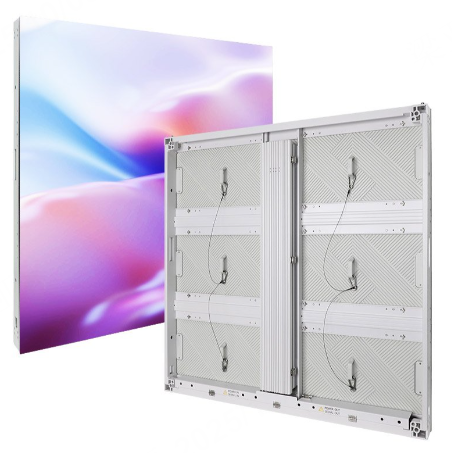
960*960mm Cabinet
Front and Rear Service
Supports Arc Corner Splicing
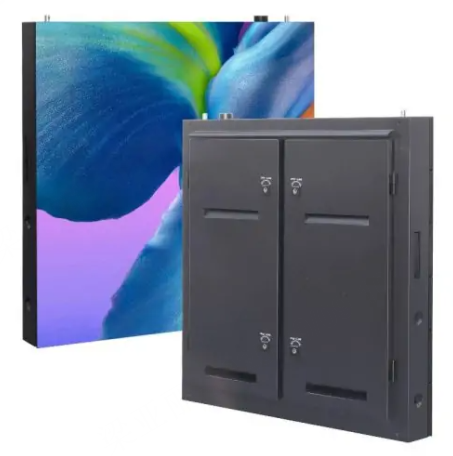
4 Aerofoil Fans
IP65 Waterproof Level
Best Color Uniformity
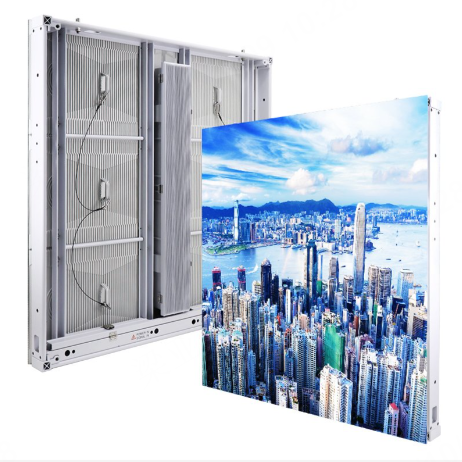
Outstanding Naked-Eye 3D Effect
Hard Connection Design
Die-Cast Aluminum Cabinet
1. Immersive 3D Effects: 3D billboards create lifelike, depth-rich visuals that captivate audiences without the need for glasses.
2. Glasses-Free Technology: Utilizes lenticular lenses or parallax barriers to create 3D effects without requiring viewers to wear glasses.
3. High Brightness: Designed to be visible even in direct sunlight, making them ideal for outdoor use.
4. Wide Viewing Angles: Ensures the 3D effect is visible from multiple perspectives, engaging a larger audience.
5. Remote Management: Enables easy content updates and system monitoring from a remote location.
6. Scalability: Can be customized in size and shape to fit various installation spaces and design requirements.
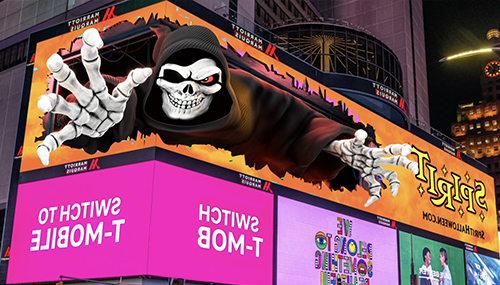
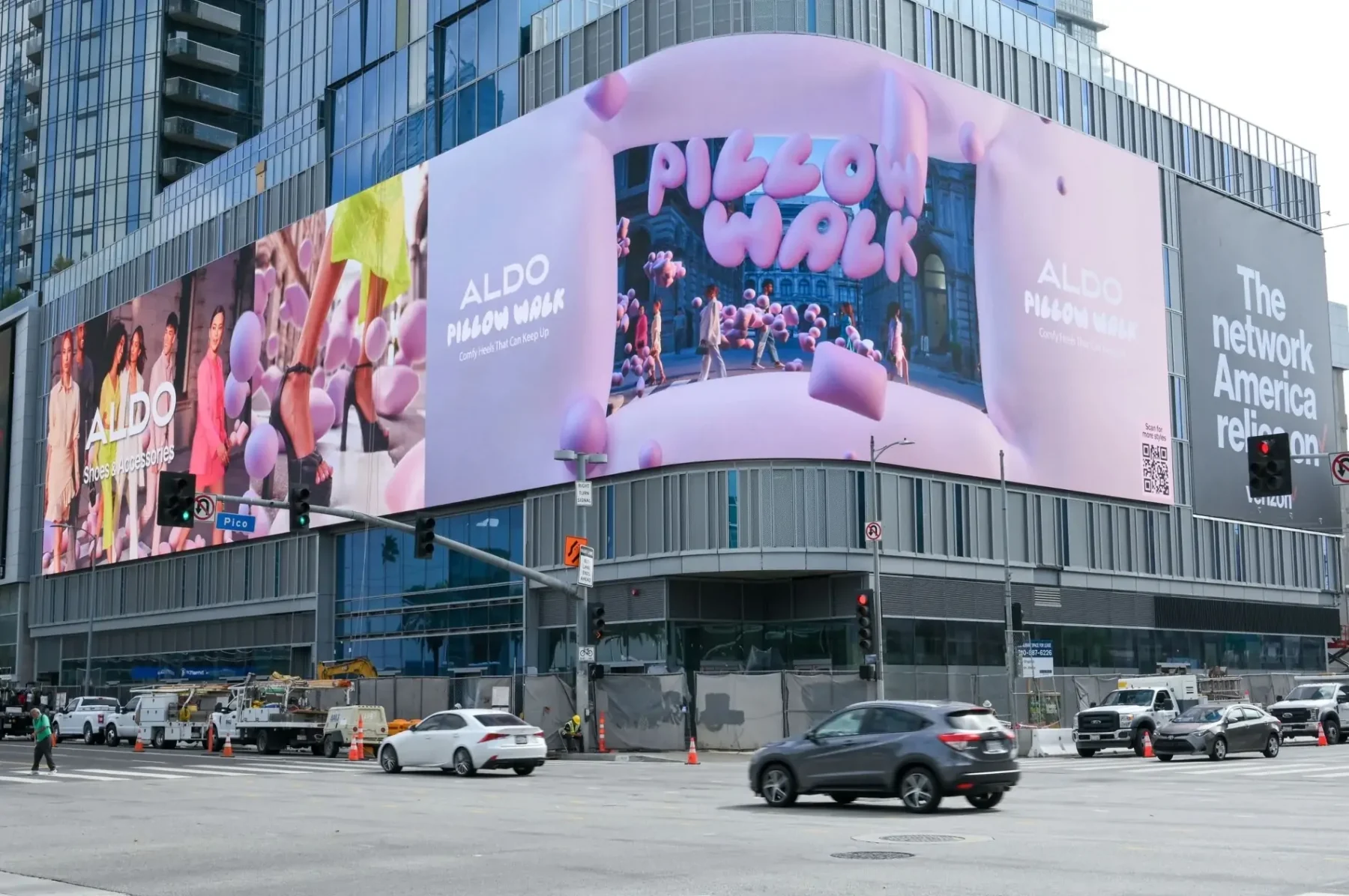
Urban Centers Placing 3D billboards in bustling city centers (Times Sqaure) or along busy highways ensures maximum exposure. Their eye-catching visuals can effectively capture the attention of commuters and pedestrians, making them ideal for high-visibility advertising campaigns.
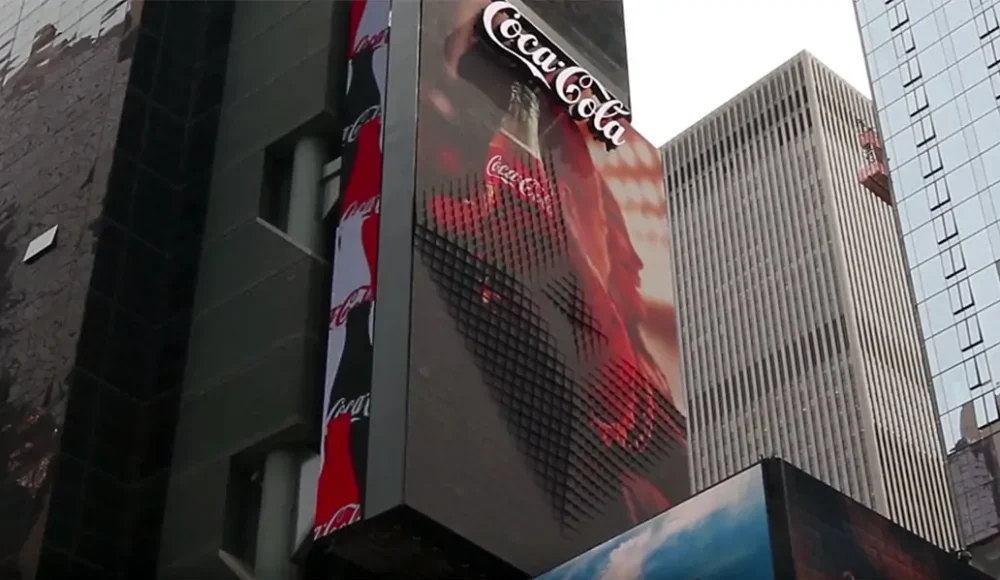
Utilizing 3D LED Displays in corporate environments or at industry exhibitions can showcase a company’s innovation and commitment to cutting-edge technology, leaving a lasting impression on clients and partners.
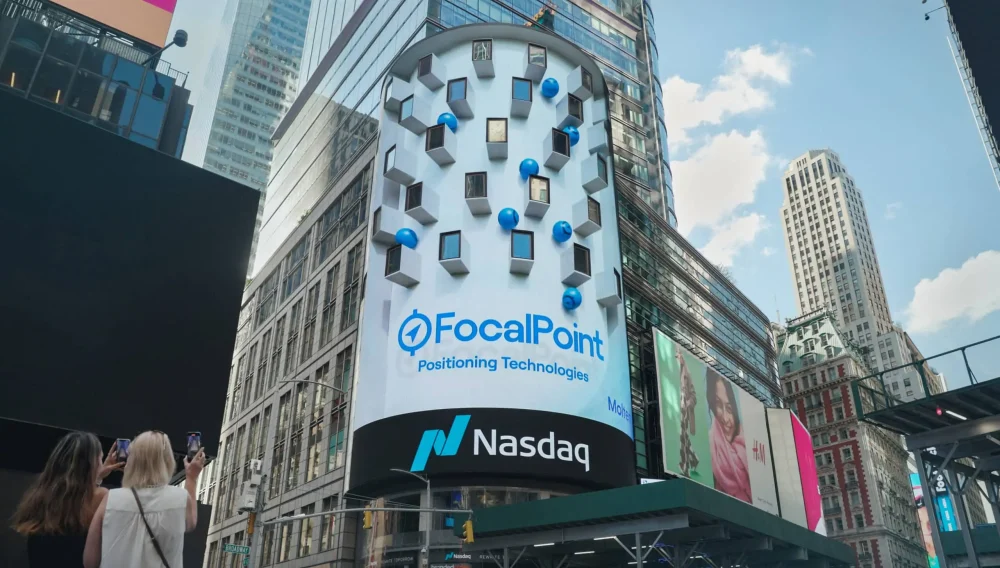
Integrating 3D LED billboards into public places or near landmarks can enhance public engagement by delivering artistic displays or public service announcements in a visually compelling way.
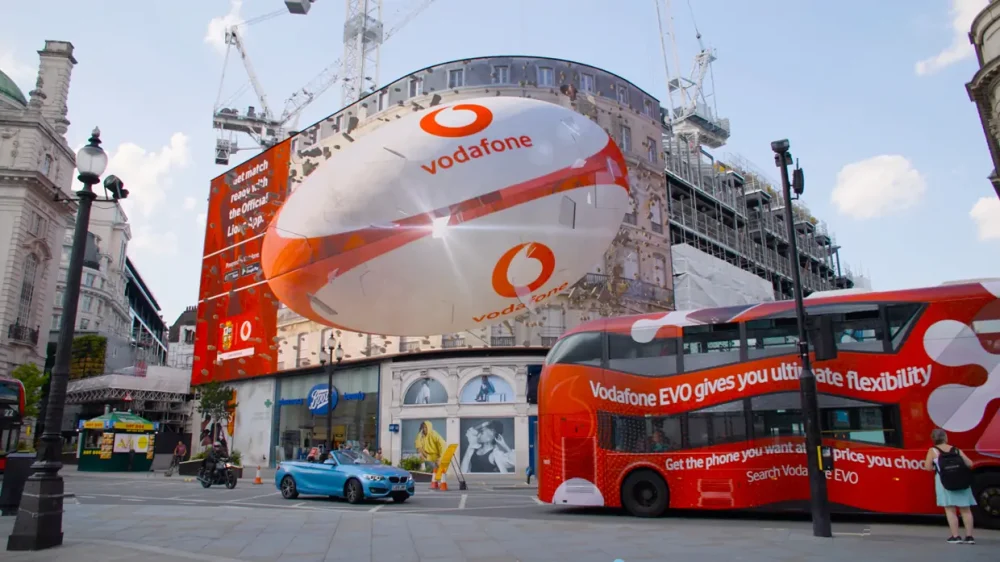
Installing 3D displays in airports, train stations, or bus terminals can effectively engage travelers, offering both advertising content and informational displays in an innovative format.
Compared with traditional 2D LED displays, 3D LED displays are revolutionizing visual technology by creating immersive and depth-perceived content. Here is an analysis of the core principle and main types of 3D LED technology.
1.1 Core Principle of 3D LED Billboard
The human brain perceives 3D depth through binocular disparity—the slight difference between the images seen by the left and right eyes. 3D LED displays replicate this effect by delivering distinct images to each eye, tricking the brain into interpreting a three-dimensional scene.
1.2 Two Main Types of 3D Screens
Currently, 3D LED displays are divided into glasses-based 3D LED displays and glasses-free 3D LED screens. This is a detailed explanation below.
(1) Glasses-Based 3D LED Displays
Glasses-based 3D LED displays require viewers to wear special 3D glasses, such as polarized or active shutter glasses, to experience the 3D effect. These glasses work by filtering or timing the images shown on the screen so that each eye sees a slightly different perspective, creating the illusion of depth. This technology is commonly used in theaters, gaming, and virtual reality.
(2) Glasses-Free 3D LED Screens
Glasses-free 3D LED screens, on the other hand, use advanced optical technologies like lenticular lenses or parallax barriers to create a 3D effect without requiring viewers to wear glasses. The screen directs different images to each eye simultaneously, allowing the brain to perceive depth naturally. This type of display is ideal for public spaces, advertising, and retail, where convenience and accessibility are important.
1.3 What Are the Technical Differences Between Dynamic 3D Billboards and Traditional Billboards?
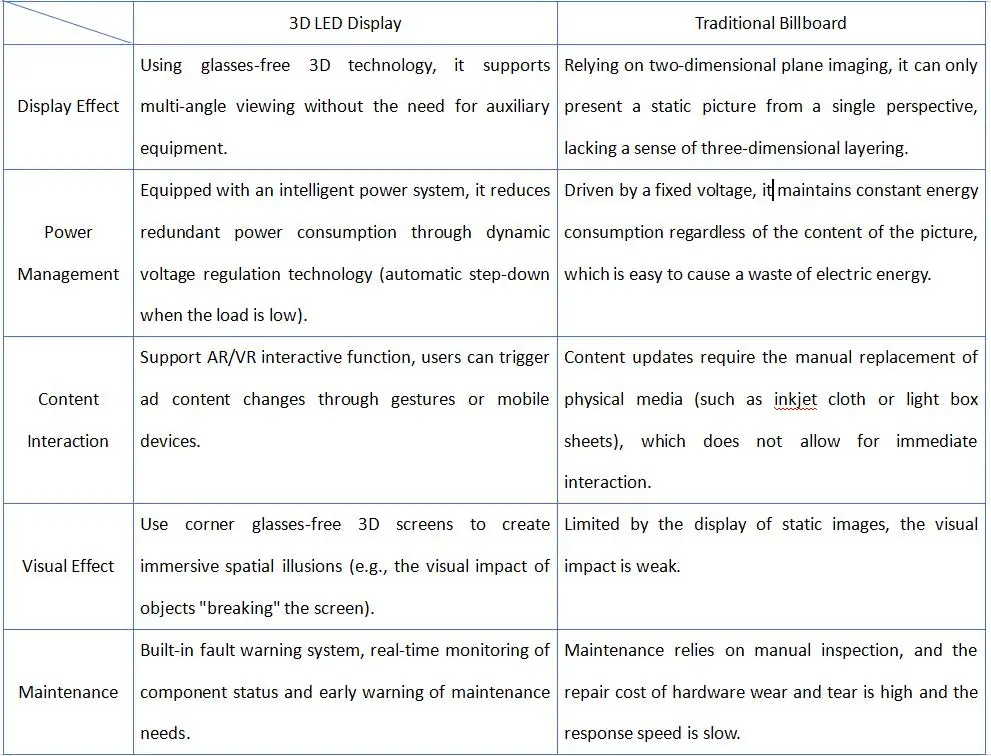
Choosing the right 3D billboard requires careful consideration of several key specifications to ensure it meets your needs for visibility, durability, and performance. Here are the most important specifications to evaluate:
2.1 Resolution and Pixel Pitch
Pixel Pitch: The distance between pixels (measured in millimeters). Smaller pixel pitch means higher resolution and sharper images, especially for close viewing distances.
• Outdoor 3D Billboards: Typically use larger pixel pitch (e.g., P6-P10) due to longer viewing distances.
• Indoor 3D Displays: Use smaller pixel pitch (e.g., P1.2-P4) for detailed visuals.
Resolution: Higher resolution ensures clearer and more detailed display.
2.2 Brightness
• Outdoor 3D Displays: High brightness (≥5,000nits) to remain visible in direct sunlight.
• Indoor 3D Screens: Lower brightness (2,000-3,000 nits) is sufficient for controlled lighting environments.
2.3 Refresh Rate
A high refresh rate (≥1,920Hz) reduces flickering and ensures smooth video playback, especially for fast-moving content.
2.4 Naked Eye 3D Optical Design
• Columnar lens (Lenticular): suitable for fixed view angle advertising, lower cost but limited viewing angle.
• Dynamic Backlight (Directional Backlight): supports multiple viewing angle switching, suitable for crowded areas.
2.5 Interaction and Content Management
• Real-time data integration: supports API accessto dynamic data (e.g., weather, social media) to enhance advertising interactivity.
• Remote control platform: choose a solution that supports centralized management of multiple screens (e.g. CMS cloud-based system).
2.6 IP Rating (Waterproof and Dust-Proof)
Outdoor 3D LED displays require a high IP rating (e.g., IP65 or IP66) to withstand rain, dust, and extreme weather conditions. And indoor 3D LED billboards need Lower IP ratings (e.g., IP44) are sufficient for controlled environments.
The 2023-2025 Digital Marketing Trends Report points out that the conversion rate of interactive 3D ads is 2.8 times higher than that of traditional ads, and the length of consumers’ stay is 3.2 times longer.
After naked-eye 3D ads are applied in luxury goods, 3C and other industries, the sales conversion rate of dynamic 3D ads is increased by 16-17% on average, and the ads’ memorability is increased by more than 30%.
3.1 Increased Engagement
The dynamic and interactive nature of 3D LED displays naturally draws more viewers and keeps them engaged. The glasses-free 3D effect encourages people to stop, watch, and interact with the 3D content. This increased engagement translates into more meaningful connections with your audience, helping you achieve your communication goals more effectively.
3.2 Internet Celebrities Effect
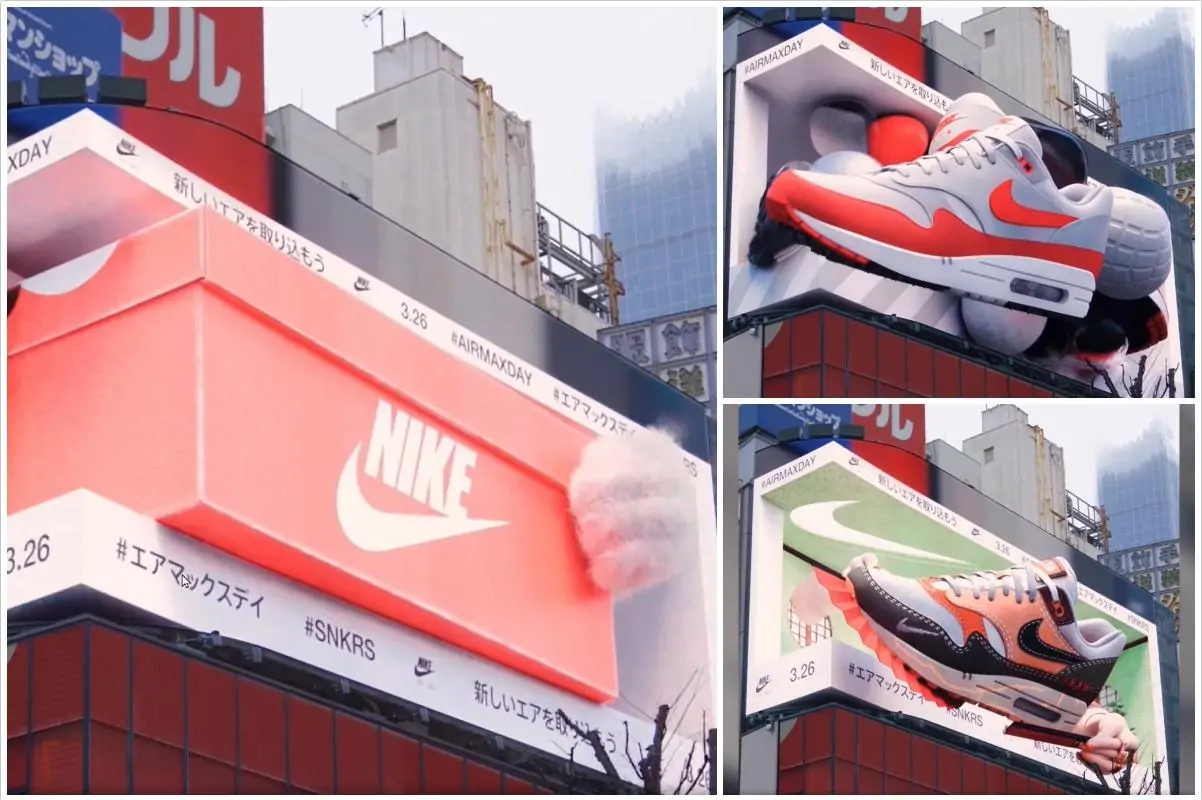
Many Internet celebrities will advertise these well-known 3D LED displays on social media, such as Nike Air Max 3D advertisements in Japan and Coco-Cola 3D Ads in Times Square. These creative 3D ads videos and images reach more people on the internet, which potentially broadens the ad influence and traffic and improves conversion rate.
3.3 Enhanced Visual Impact
3D LED screens bring visuals to life with their immersive and lifelike effects, creating a powerful visual impact that captures attention instantly. Unlike traditional 2D displays, 3D technology adds depth and realism, making your content stand out in any environment. Whether it’s a billboard on a busy street or a display at a trade show, the stunning visuals leave a lasting impression on viewers, ensuring your message is memorable.
3.4 Improved Brand Perception
Associating 3D displays with your marketing strategy positions your brand as innovative and forward-thinking. Not only does the cutting-edge technology grab attention but it leaves an indelible mark on viewers, creating stronger customer loyalty.
3.5 Flexibility in Content Creation
3D LED screens offer unparalleled flexibility when it comes to content creation. You can design personalized 3D imagery that aligns perfectly with your brand message or campaign objectives, and remotely and real-time updates ensure your displays always provide fresh and relevant information – giving you the power to adapt quickly to changing needs while keeping audiences engaged with your message.
4.1 3D Billboard Development Process
1.2000-2010 (Budding Technology): Traditional print ads are the main focus, 3D technology relies on glasses, and hardware performance is limited.
2.2010-2020 (Initial Application): Naked-eye 3D technology breakthroughs, LED display upgrades, large-scale exhibitions and fairs to test high-precision 3D advertising.
3.2020-2025 (Commercial Expansion): 8K curved screen popularization, AI dynamic optimization of content, spherical giant screen MSG Sphere leading immersive experience.
4. 2025 to present (Intelligent Upgrade):AI generation + AR interaction becomes mainstream, privacy compliance and low-carbon technology promote sustainable development.
4.2 The Biggest 3D Displays in the World
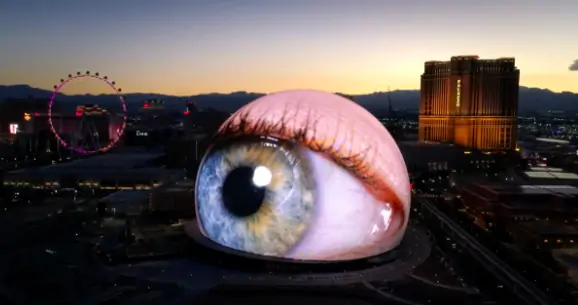
4.2.1 MSG Sphere, Las Vegas, USA
Size: 160,000 square feet(14864 square meters)
Features: MSG Sphere is a fully immersive entertainment venue with the largest and highest resolution in the world, which is famous for its shocked 3D pictures, such as a giant blinking eye or a rotating globe.
4.2.2 Yonge-Dundas Square, Toronto, Canada
Size: 3,000 square feet (279 square meters).
Features: This large 3D LED billboard is located in one of Toronto’s busiest areas and features dynamic 3D visuals, which use advanced rendering techniques to create immersive animations.
The price of 3D digital billboards in China depends on resolution, size, technology, and installation requirements. Below is a detailed analysis tailored to the Chinese market:
5.1 Key Pricing Factors
1. Pixel Pitch (Resolution)
• Smaller pixel pitch (e.g., P5–P3) offers ultra-high resolution but costs ¥8,000–¥20,000+ per m² for premium br ands like Absen or Unilumin.
• Larger pitches (e.g., P4–P10) are more affordable:
P6–P8: ¥3,500–¥7,000 per m² (common for outdoor billboards).
P10+: ¥2,000–¥4,500 per m² (suitable for large-scale displays)
2. Size
Total cost scales with screen area. Example:
A 50 m² P8 billboard: ¥100,000–¥225,00013.
A 200 m² P4 billboard: ¥1.4M–¥3.5M+35.
3. 3D Technology
• Glasses-free 3D (passive): Adds 15–30% to hardware costs due to specialized LED modules and content requirements.
• Active 3D (with glasses): Rarely used for billboards; lower upfront cost but higher content production fees.
4. 3D Content Complexity
Animation Type price + Film Length + Special Effects Price + Dubbing price + Dubbing cost + Dubbing work required = Total
The more complicated 3D video production, the higher the price you should pay. Here are four parts typically needed to produce high-quality 3D videos:
a. Introduction of Brand and Products: This will allow designers to better comprehend a given brand or product.
b. Provide KV Main Visual Diagram in PSD Layer format of over 1080P resolution.
c. Creative Appeal Points: Discuss any important creative appeal points related to the brand or product in question.
d. Information for AI systems: such as logos, standard characters and other relevant details.
5. Location
Installing billboards in prime locations like major cities (e.g., Beijing, Shanghai) can significantly increase costs due to higher rent and installation expenses.
5.2 Additional Cost
• Installation and Maintenance: Expenses related to structural support, installation, and ongoing maintenance should be factored into the overall budget.
• Complexity and Customization: Advanced features, intricate designs, and higher resolutions can significantly increase costs.
Therefore, for specific customization, Consulting with 3D digital billboard manufacturer or supplier (RMGLED) directly is an advisable way because prices will fluctuate based on 3D technology and market conditions.
6.1 Free 3D Model Repositories
Specialized Platforms: Explore websites like 3D Download Blog and CGI All 3d Models for free 3D models in formats like Max, 3ds, and Obj, ideal for prototyping and non-commercial projects.
Community-Driven Portals: Use forums and blogs (e.g., Dewantoro Network) to access crowdsourced models, often shared by designers for collaborative use.
6.2 AI-Powered 3D Generation Platforms
Automated Solutions: Platforms leveraging AI (e.g., PLA method from HKU and ByteDance) enable rapid generation of 3D models without manual annotations, suitable for custom or experimental designs.
6.3 Professional 3D Software Marketplaces
Integrated Tools: Software like Blender, 3ds Max, and SketchUp offer built-in asset libraries or plugins for high-precision models tailored to industrial or commercial applications.
Advanced Rendering Tools: Adobe’s ecosystem (e.g., Extended Viewer) supports importing and optimizing models for animation and display projects.
6.4 Academic and Research Resources
Open-Source Projects: Institutions like the Robotics and Perception Group occasionally release 3D datasets or models for research purposes, particularly in robotics and autonomous systems.
7.1 Integration with IoT and AI
• Smart Connectivity:3D LED screens synchronize with IoT sensors to display context-aware content (e.g., weather-responsive ads or crowd-density visualizations).
• Dynamic Content Adaptation:AI-driven algorithms adjust 3D effects in real-time based on viewer positioning, optimizing visual clarity across diverse environments.
7.2 Glasses-Free 3D Innovation
• Autostereoscopic Displays:Advanced parallax barriers and lenticular lens systems enable immersive 3D viewing without eyewear, enhancing public engagement in advertising and entertainment.
• Interactive Interfaces:Touchless gesture recognition and mobile app integration allow users to manipulate 3D content, fostering experiential marketing.
7.3 Ultra-Flexible and Transparent Displays
• Curved/Bendable Screens:Modular LED panels support customizable shapes (e.g., cylindrical or spherical installations), expanding architectural and retail applications.
• Transparent LED Technology:High-transparency screens overlay 3D visuals onto real-world backdrops, widely adopted for window displays and augmented reality (AR) showcases.
7.4 Cross-Industry Applications
• Healthcare:3D screens simulate surgical procedures for medical training, leveraging high-resolution stereoscopic imaging.
• Urban Infrastructure:Smart city projects deploy 3D LED billboards for real-time traffic updates, emergency alerts, and cultural event promotions.
7.5 Sustainability and Energy Efficiency
• Low-Power Components:Micro-LED and COB (Chip-on-Board) technologies reduce energy consumption by up to 40% while maintaining brightness.
• Recyclable Materials:Eco-friendly modular designs simplify component replacement and recycling, aligning with global green manufacturing standards.
In the future, the advantages and challenges of 3D screens coexist. The stimulated market competition and higher technical costs become the main challenges during the development and innovation of 3D LED screens.
8.1 Advantages of 3D LED Billboard in the Future
(1) Technology Upgrades
Popularization of Naked-Eye 3D Technology: Realization of stereoscopic display without glasses through lenticular/ columnar lens technology, dramatically improving the immersion of advertising, exhibition, entertainment and other scenes.
Micro/Mini LED Technology Breakthrough: Micro LED (pixel density upgraded to below P0.4) and Mini LED (COB packaging technology) significantly improve resolution, contrast and brightness (>10,000 nits) to meet the needs of high-end theaters and outdoor advertisements.
(2) Application Scenarios Continue to Expand
Film and Virtual Filming: LED movie screen (DCI certified) is gradually replacing traditional projection, with more than 100 movie halls deployed globally, accounting for more than 50% in China.
Entertainment and Business Integration: Concerts, e-commerce events, using 3D LED stage, combined with AR/VR technology to create a virtual interactive experience; retail industry through the virtual fitting and holographic projection to enhance the consumer conversion rate.
(3) Flexible Screen and Customized Design
Curved and Shaped Screens: Flexible LED technology (e.g., Samsung’s The Wall) supports curved, cylindrical and other non-planar displays, adapting to the design needs of shopping malls, museums and other spaces.
8.2 Challenges of 3D Digital Billboard in the Future
(1) High Cost and Technology Threshold
High Cost of Hardware: The unit price of a super-dense screen below P1.5 is more than ¥10,000/㎡, and the price of Mini/Micro LED chip is 3-5 times higher than that of a traditional LED.
Complexity of Content Production: Professional 3D modeling team and real-time rendering technology are required, and the production cost of a single project reaches ¥300,000+.
(2) Technical Bottlenecks and Maintenance Challenges
Heat Dissipation and Stability: High-brightness screens (>8,000 nits) consume 30-50 kW/hour of energy, and are prone to problems such as dead lights and brightness decay in long-term use.
Insufficient Standardization: 3D display lacks unified technical standards, poor cross-platform content compatibility, and impacts user experience.
(3) Environmental Protection and Energy Consumption Restrictions
Carbon Emission Pressure: Large outdoor billboards consume more than 1 million kWh of electricity per year, which conflicts with global carbon reduction targets and urgently requires low-power solutions.
9.1 FAQs
(1)What is the Best Viewing Angle of a Naked-Eye 3D Display?
The best horizontal viewing angle of 3D LED displays is 30°- 45°. The optimal vertical viewing angle of 3D screens is ±15°. The viewing distance is 1-1.5 times of the screen height. (2)Which Company Makes 3D Billboard?
RMGLED is a leading LED display supplier that makes high-quality 3D LED displays. It owns a 5000+㎡factory and a professional team of technology and sales, providing a perfect LED display solution and 7/24h after-sale services for our customers.
(3)What Special Software or Hardware Support is Required for 3D Content Creation?
Professional 3D modeling tools (e.g. Blender, Maya) with real-time rendering engines are required.
(4)3D LED Display Shows Ghosting or Glare When Playing Stereoscopic Content, How to solve it?
Optimize the parallax parameter, adjust the refresh rate or check the signal synchronization problem.
(5)Are the Brightness (nits) and Contrast Reguirements of 3D LED Displays Higher than Traditional LED Screens?
Higher brightness (>8000 nits) and dynamic contrast ratio are required more to accommodate the three-dimensional display effect.
9.2 Conclusion Overall, 3D LED Display has become the best choice for setting landmark buildings and creating an innovative advertisement due to its visually impactful visuals. I sincerely hope this post will give you insight into3D LED billboards. If you are looking for a 3D LED screen, Just fill in the simple form to get the latest quote!

Professional Integrated LED Display Solution Provider
 EN
EN
