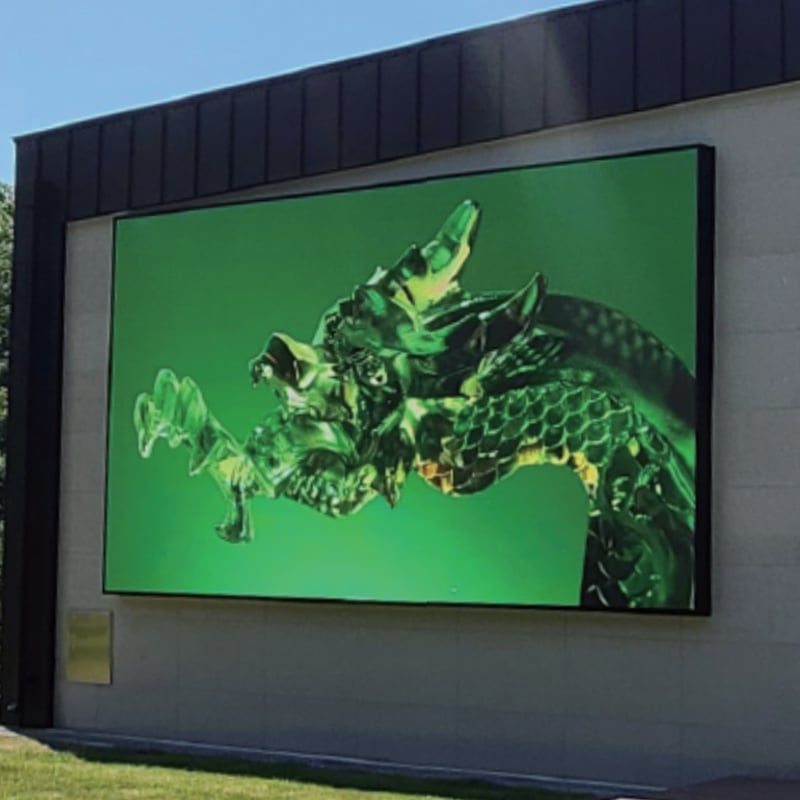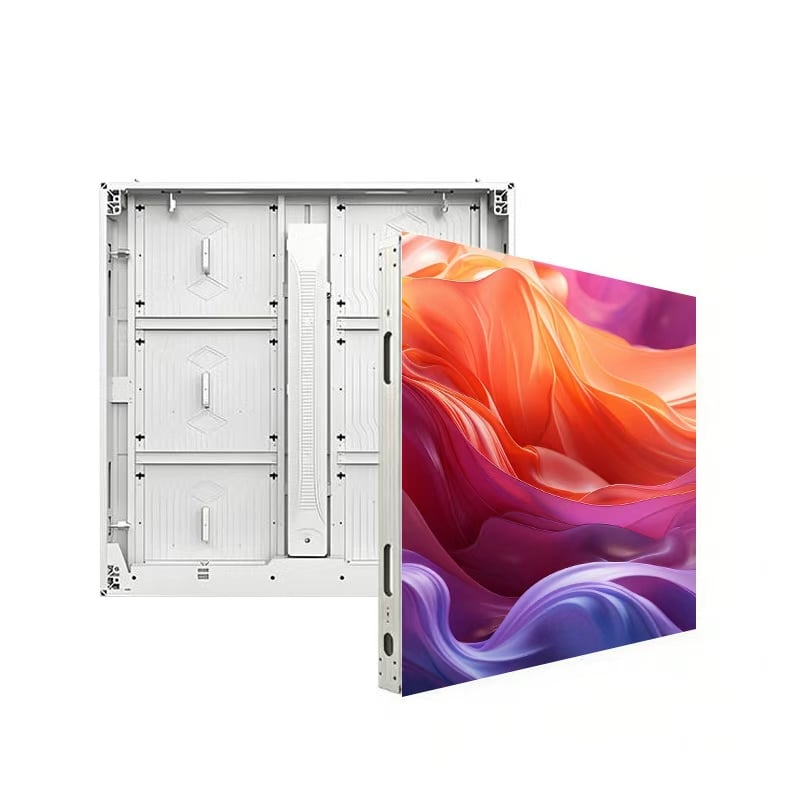
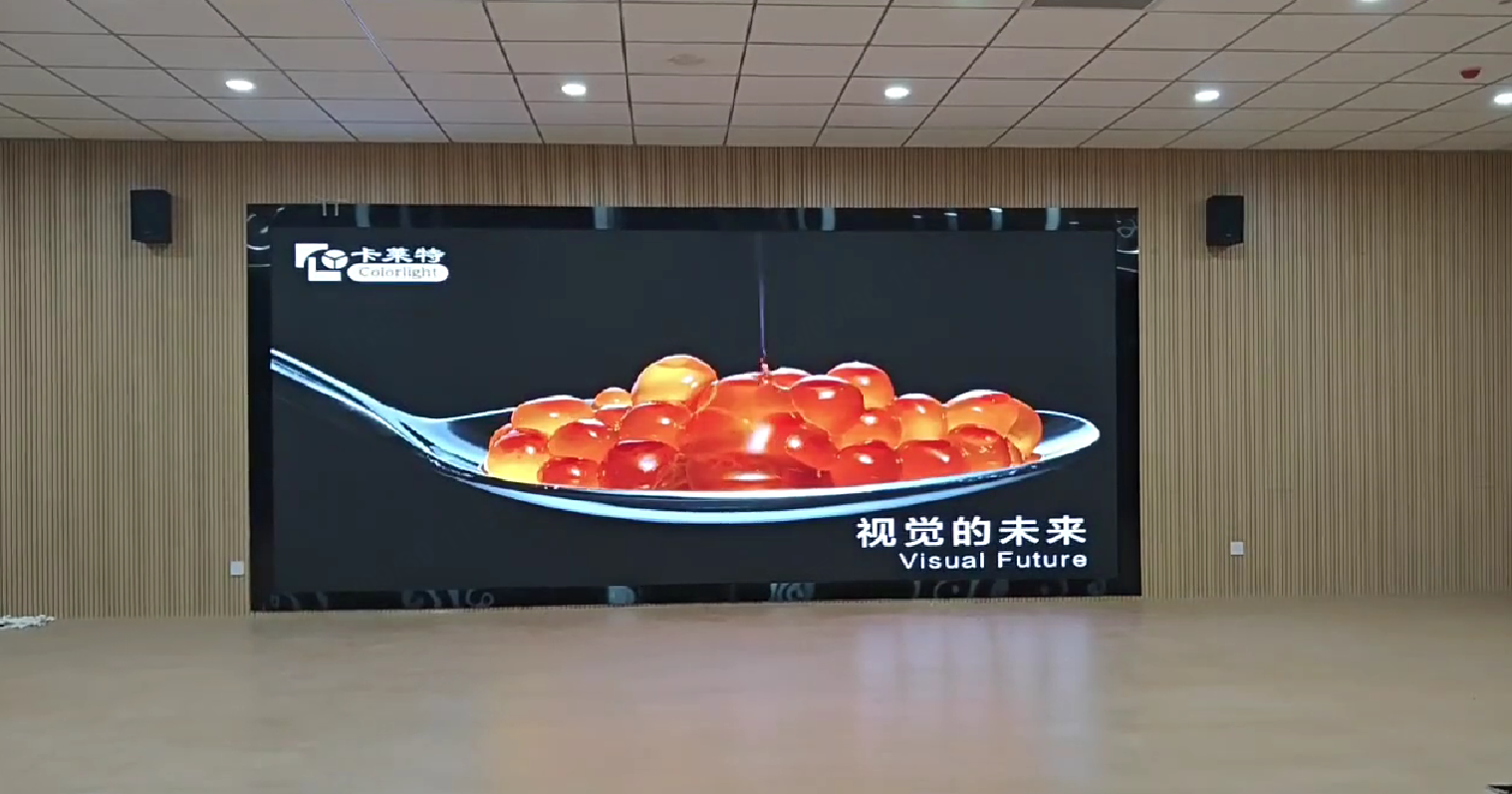
RMGLED offers high-quality fixed indoor LED screen products that are well-suited for various locations such as churches, shops, studios, conference rooms, and offices. You can select the appropriate series according to your specific indoor application needs.
Indoor LED display screens are extensively utilized in a variety of indoor settings like exhibition halls, conference halls, churches, shops, hotels, airports, and theaters. They have emerged as a crucial means for modern information display and advertising dissemination.
1. What Is Indoor LED Screen?
Indoor LED display, as its name implies, is an LED display device designed for indoor environments. It is widely employed in supermarkets, shopping malls, banks, companies and numerous other locations, and has evolved into an integral part of modern indoor display technology.
Indoor LED panel screens boast a high-definition resolution, and their pixel pitch is usually P4mm or smaller. Common pixel pitches include P4, P3, P2.5, P2, P1.86, P1.56, P1.25, P0.93 and so on.
Indoor LED walls differ considerably from outdoor LED signs in several aspects. Here are some of the key points:
1.1 Brightness Level
Given the impact of ambient light, indoor displays generally need a relatively lower brightness level, typically around 600 nits. In contrast, outdoor displays usually require a brightness level exceeding 6000 nits to guarantee visibility under intense light conditions.
1.2 Pixel Pitch
The pixel pitch plays a crucial role in determining the clarity and viewing effect of the screen. For indoor LED screen displays, a smaller pixel pitch is necessary for close viewing to prevent image distortion. The higher the resolution, the more image content an indoor LED video wall can present, thus leading to better picture quality. Moreover, the pixel pitch also influences the optimal viewing distance of the LED screen.
1.3 Protection
Indoor LED displays are commonly rated at IP31, which suffices for ordinary indoor environments. Outdoor displays, on the other hand, need to have a higher level of protection, at least IP65, to withstand harsh weather conditions like rain, heat, glare and dust.
1.4 Cost
The cost of LED signage varies according to factors such as raw materials, size and resolution. Small-pitch LED boards tend to be more costly due to the large number of lamp beads they contain, while larger LED displays also come with a higher price tag.
The high-definition resolution and fine pixel pitch of indoor LED video walls make them highly suitable for close-up viewing. Compared to outdoor LED screens, indoor screens have distinct requirements and standards regarding brightness, protection and cost. These differences dictate their performance and selection criteria in different application scenarios.
2.1 High-Resolution Screen
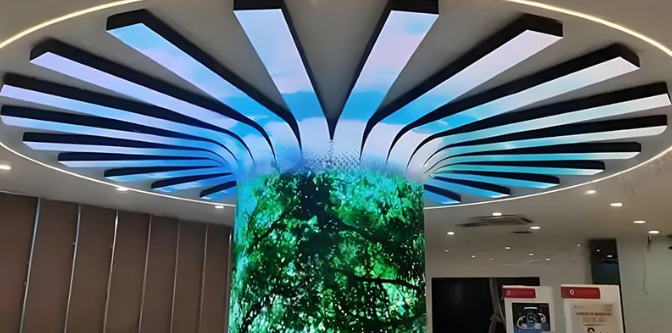
Indoor LED walls typically possess a high pixel density, with pixel pitches like P1.53, P2, P2.5, P3, P4, enabling the screen to present a more detailed and clear image, which is ideal for close viewing.
2.2 Diverse Application Locations
Indoor LED displays are applicable to a wide range of places, such as window displays, storefronts, shopping centers, retail stores, hotel lobbies, offices, and restaurants. They can be installed in nearly any indoor setting.
2.3 Customizable Screen and Size
RMGLED provides customized LED screens to cater to the distinctive requirements of different customers. Whether it's for commercial advertising, exhibition display, or special creative applications, RMGLED can offer flexible solutions.
2.4 Simple Installation and Maintenance
The screen design is user-friendly, making it easy to install and maintain. Indoor LED display screens support full front maintenance. For instance, the EA640F2 LED screen allows for more convenient and speedy maintenance.
2.5 Low Brightness yet High Contrast Ratio
Indoor LED display boards feature low brightness, usually ranging from 600 to 1200 nits. They have high contrast, high color reproduction, and deliver an excellent visual effect.
2.6 Cost-Efficient
The RMGLED LED indoor display series are cost-efficient, with reasonable prices and reliable after-sales service. We provide our customers with high-quality LED displays at the most favorable prices.
3.1 High-Definition Display
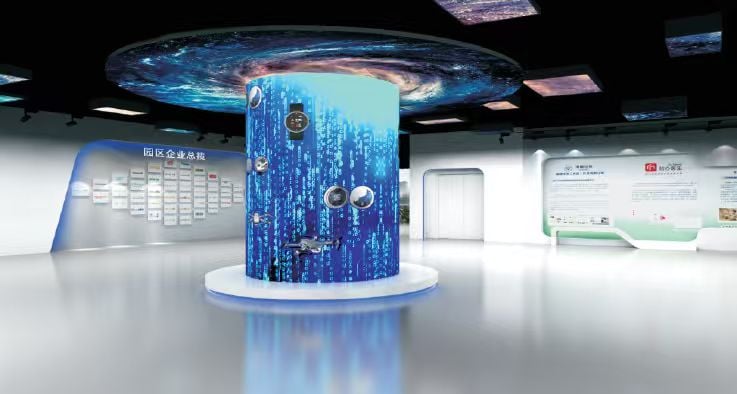
Indoor digital signs feature a small pixel pitch and a high resolution within each unit area, allowing them to showcase graphics, images, and videos with greater clarity. Their high grayscale performance translates to more powerful color expression, a stronger sense of image layering, and enhanced vividness, thus providing a superior visual experience.
3.2 High Refresh Rate and High Contrast Ratio
The minimum refresh rate of indoor LED displays can attain 3840Hz, which guarantees high picture stability. When using mobile phones, cameras, or other devices to take pictures or record videos, the screen image remains stable, without any ripples or black screen issues, ensuring the flawless presentation of the shooting effect.
3.3 Excellent Color Reproduction
Indoor LED display screens integrate the light-emitting principle of LEDs themselves and utilize point-by-point correction technology to maintain the authenticity of colors. Whether it's for advertising or video playback, indoor LED screen displays are capable of offering outstanding color reproduction capabilities and delivering an immersive visual experience to the audience.
3.4 Three-Dimensional Visual Experience
The three-dimensional visual experience offered by high-definition images is truly astonishing. Whether it's a live TV broadcast or digital advertising, small-pitch LED video walls can bring extraordinary audio-visual enjoyment to the audience and create an immersive visual experience.
3.5 Extended Service Life
The service life of indoor LED displays is longer than that of other display devices. Particularly in the indoor small-pitch domain, since less brightness is required, the power consumption is also lower. This not only lengthens the lifespan of the equipment but also reduces energy consumption, making it both economical and environmentally friendly.
Taking into consideration factors such as the viewing distance, budget, size, and special requirements, you can select the most fitting indoor LED display to guarantee the best practical outcomes.
4.1. Take Viewing Distance into Account
The pixel pitch directly influences the optimal viewing distance. Hence, it's crucial to pick the right dot pitch based on the distance between the viewer and the display. Here is a commonly used formula in the industry for calculating the viewing distance:
– The nearest viewing distance for an LED screen = pixel pitch (in mm) × 1000– The optimum viewing distance for an LED screen = pixel pitch (in mm) × 1000 to pixel pitch (in mm) × 4000– The maximum viewing distance for an LED display = pixel pitch (in mm) × 8000
4.2. Align with Your Budget
The smaller the pixel pitch, the higher the pixel density and the better the picture quality. However, this also leads to an increase in the cost of the LED screen. A smaller pixel pitch implies a more refined production process and requires more investment in raw materials, thereby raising the purchase cost. Consequently, if the audience is positioned at a relatively long distance from the LED screen, it's advisable to opt for a larger pixel pitch to save on the budget.
4.3. The Significance of Size
Apart from the commercial domain, indoor LED products are gradually making their way into the household sector. Many customers choose high-definition LED video walls instead of LCD TVs in order to obtain a larger television picture. For instance:
If you need a display with an aspect ratio of 2:1, we suggest the EA640F2 series LED wall. It has a cabinet size of 640x480mm, and six LED panels can be combined to form a large 1920x960mm display.
If a 16:9 display is required, the EA169F3 series LED video wall is recommended. It features a cabinet size of 600×337.5mm and an aspect ratio of 16:9, which can achieve standard 2K, 4K, and 8K resolutions.
4.4. Considering Special Requirements
In certain specific application scenarios, special requirements need to be taken into account. For example, in virtual productions within cinematography or broadcast studios, displays are required to operate reliably under camera equipment. LED screen panels with a small pixel pitch can ensure the perfect presentation of media content.
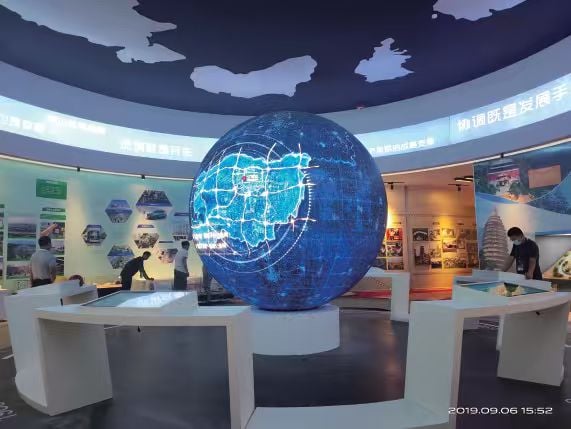
From Surface Mount Device (SMD) to Chip-on-Board (COB) small pitch, Mini LED, and Micro LED, the LED industry is embracing a new wave of technological innovation and market opportunities. RMGLED offers enhanced visual experiences and solutions for indoor LED displays across various industries.
5.1 90° LED Display Series
RMGLED provides customized 90° LED boards that are applicable to a wide variety of uses, such as creating creative LED banners in shopping malls and for other indoor creative applications. The curved LED wall allows for seamless splicing and can be assembled and installed to form a curved surface by combining an ordinary flat LED screen with a 90° LED signage at the corner.
5.2 COB Small Pitch LED Displays
The EA600COB1 series of COB small-pitch LED screens are distinguished by their high refresh rate, wide grayscale, and high brightness. Its ultra-lightweight and high-precision design cuts down on the resources and efforts needed for transportation and installation.
5.3 All-in-One Series
The All-in-One series incorporates the functions of video communication, presentation display, collaborative whiteboard, and wireless projection, among others. It serves as a representative of the new generation of LED screens. Given the need for close viewing, indoor fixed LED walls have become one of the top choices for All-In-One LED boards.
5.4 Virtual Production LED Wall Series
As a new technology in the film and television industry in recent years, the virtual production LED wall has been drawing increasing attention. Due to the requirement for a fine pixel pitch, indoor LED screens are the natural choice for virtual production. This innovative and revolutionary concept combines Extended Reality (XR), cutting-edge filmmaking technology, and LED display walls.
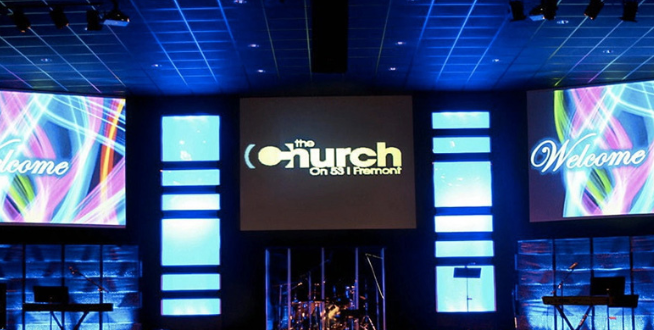
6.1 Indoor LED Displays in Churches
Indoor LED video walls are well-suited for installation within churches. They can be utilized to display content from the Bible, videos, and the like, thereby strengthening the communication between the church and its congregation.
6.2 Indoor LED Signs for Business Purposes
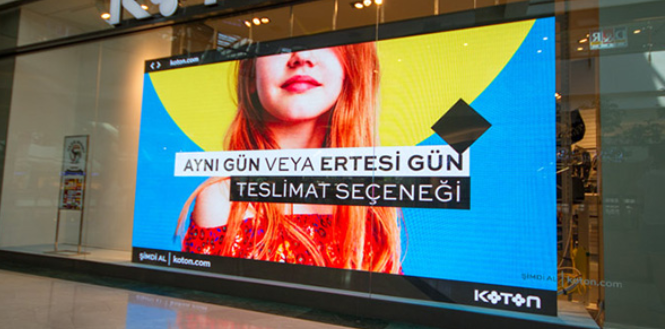
In shops, LED display boards are employed to play advertising videos, showcase promotional information, and conduct brand promotion. This helps draw customers' attention, enhances the shopping experience, and boosts sales performance.
6.3 Indoor LED Video Walls for Offices
In office spaces, meeting rooms, and similar areas, indoor LED display screens are installed to publish announcements and display meeting content. This improves the efficiency of information dissemination.
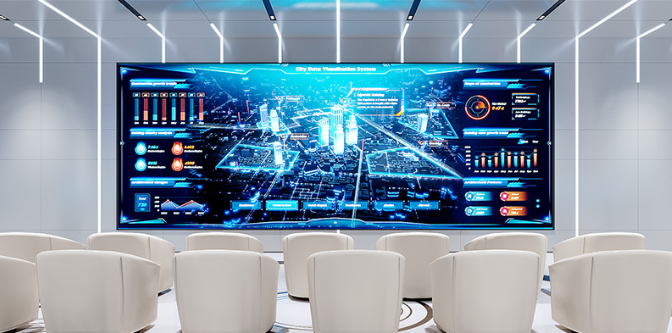
6.4 Indoor LED Walls for Command Centers
In crucial locations such as monitoring centers and command centers, LED sign boards are used for real-time video monitoring, data analysis, as well as command and dispatch operations. This enhances management and emergency response capabilities.
6.5 Indoor LED Signages for Airports
At airports or subway stations, indoor digital display boards are used to publish flight information, train schedules, and provide passenger guidance. This helps improve the level of public transportation services.
6.6 Indoor LED Panels for Schools
In classrooms or training centers, indoor LED sign boards are used for multimedia teaching, distance education, and training demonstrations. This contributes to improving teaching quality and training effectiveness.
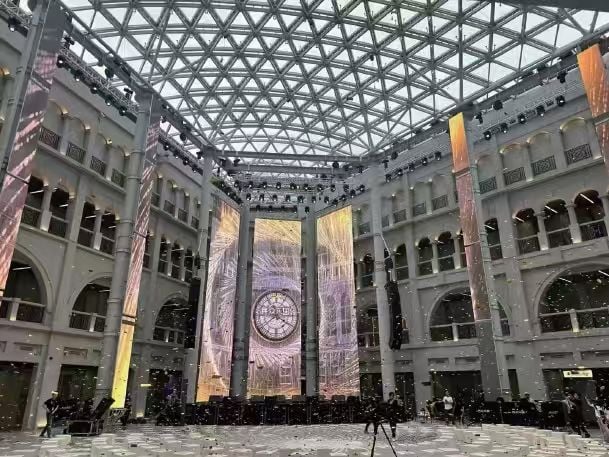
7.1 Superior Quality Products
As a renowned LED display supplier, RMGLED enjoys an excellent reputation for offering high-quality indoor LED screens for sale. Moreover, it provides impeccable after-sales service to guarantee prompt support and assistance.
7.2 Customization Possibilities
To cater to the specific requirements of different customers, RMGLED presents a broad array of customization options. These cover aspects such as screen size, shape, resolution, brightness, and color.
7.3 Technical Support and Post-Sales Service
We offer our customers all-round technical support and post-sales service to assist you in resolving diverse issues that may arise during the installation, operation, and maintenance of LED displays.
7.4 Global Customer Testimonials
RMGLED has furnished high-quality indoor LED display solutions to numerous customers across the globe. Our success stories span across multiple industries and various application scenarios.
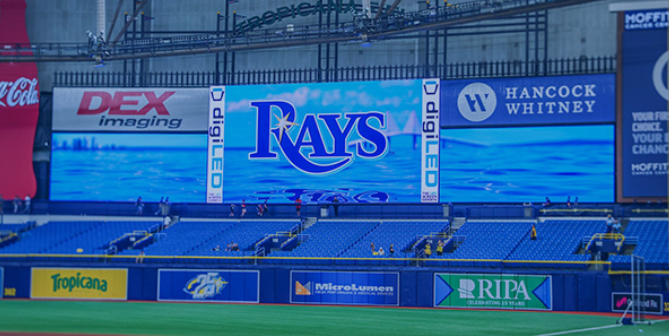
8.1 What Constitutes a Reasonable Pixel Pitch for an Indoor LED Screen?
The selection of pixel pitch hinges on the viewing distance. Typically, the optimal viewing distance ranges from 1 to 3 times the pixel pitch (measured in meters). For instance, the ideal viewing distance for a P2 LED screen is between 2 and 6 meters, while for a P3 LED display, it is 3 to 9 meters. Opting for the appropriate pixel pitch can guarantee the best screen display quality and prevent distortion when viewing from a close range.
8.2 What Are the Sizes of Indoor LED Screens?
Indoor LED video walls are available in a diverse range of sizes and are generally smaller than outdoor LED boards. The modular design of LED displays enables them to be adjusted to suit different scenarios, spanning from small meeting rooms to large exhibition halls, thereby delivering ideal display results.
8.3 What Key Parameters Should Be Considered When Purchasing an Indoor LED Screen?
When buying an LED display, several crucial parameters merit attention:
Brightness: This determines how visible the display will be under various lighting conditions.
Viewing distance: It influences the choice of pixel pitch, which subsequently impacts the display effect.
Power consumption: This determines the operating costs, and a display with low power consumption is more energy-efficient.
Refresh rate: It affects the screen stability of the display. A screen with a high refresh rate will not exhibit ripples or black screen issues when photographed or recorded.
8.4 Factors Influencing the Price of Indoor LED Display Screens
(1) Driver IC: It serves the function of supplying compensation current to the LEDs and also has a direct impact on color uniformity, grayscale, and refresh rate. High-quality driver ICs can considerably enhance the display effect.
(2) LED Beads: As the most essential raw material for LED boards, their price is affected by factors such as the number of pixels, the size of the lamp beads, and the brand. High-quality lamp beads can ensure the brightness and lifespan of the screen.
(3) LED Power Supply: Each square meter of an LED screen typically utilizes 3 to 4 power supplies. The greater the power consumption of an LED display, the more power it requires, and consequently, the price will increase accordingly. Efficient power supplies can improve energy utilization and reduce power consumption.
(4) LED Screen Cabinet: This factor is mainly associated with the raw materials used for the cabinet. The density and quality of the materials affect the durability and stability of the display.
8.5 How to Install an Indoor LED Screen?
Indoor LED screens are straightforward and quick to install. You can opt to install them on the wall, ceiling, or using a bracket. Our professional staff will offer you timely technical support to ensure that the installation process is carried out smoothly.
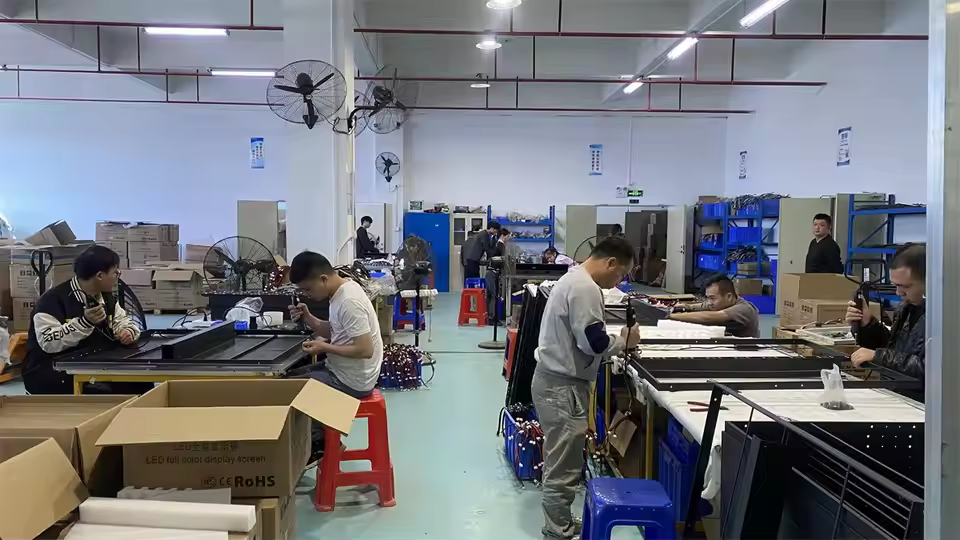
This article covers the characteristics, advantages, selection approaches, trends as well as frequently asked questions regarding indoor LED video walls. By reading it, you'll be able to make purchasing decisions with greater confidence and make sure that you obtain a high-quality display at the most favorable price. Should you wish to know more about LED screens or obtain a reasonable quotation, please don't hesitate to get in touch with us.

Professional Integrated LED Display Solution Provider
 EN
EN