The stadium LED display serves as a crucial instrument for sports stadiums. It plays a significant role in presenting real-time replays, improving statistics, and showing brand advertisements, thereby effectively strengthening the sense of immersion for the audience.
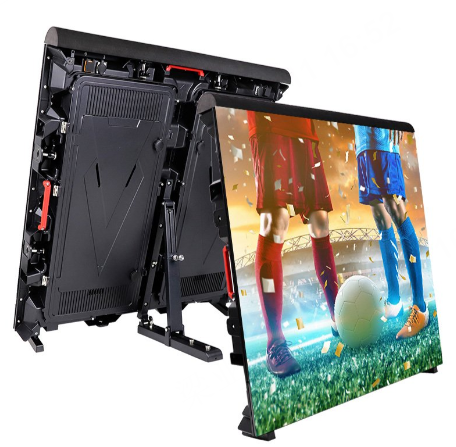
60°-90°Adjustable Back Bracket
3840Hz High Refresh Rate
6000CD/㎡ High Brightness
IP65 Waterproof Level
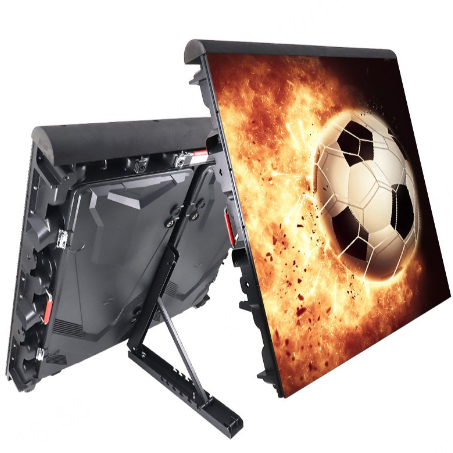
60°-90°Adjustable Back Bracket
Protective Pillowcase and Soft Mask Design
IP65 Waterproof Level
Support Customized Service
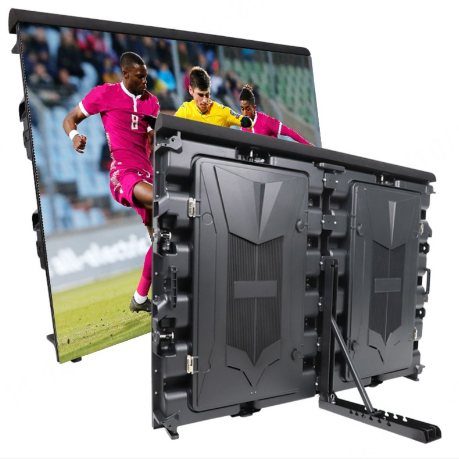
60°-90°Adjustable Back Bracket
Impact-Resistant Design
Multiple Installation Methods
Support Customized Service
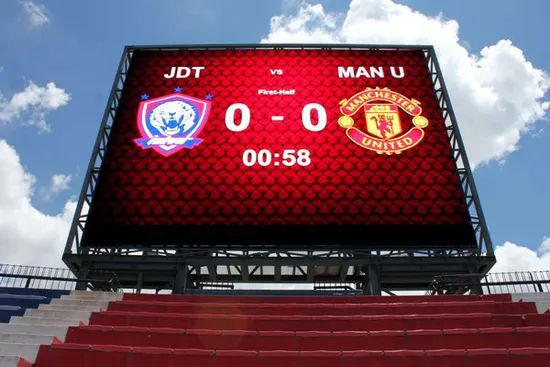
LED scoreboards have developed from merely showing scores to transforming into key centers for both information dissemination and entertainment. They play a crucial part in molding the overall experience of fans. Instead of just providing basic scoring updates, these screens now present instant replays, comprehensive player statistics, and even interactive elements that are intended to draw the fans in and get them involved.
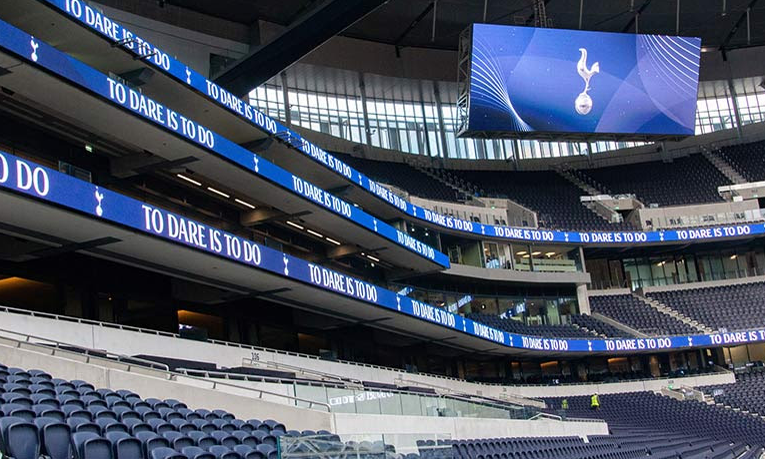
Ribbon displays possess great versatility in their design. They can be bent into curves or installed in a 360-degree setup, enabling them to blend smoothly with the architectural contours of the venue. These displays fulfill numerous functions, such as presenting advertisements from sponsors, playing captivating animations, exhibiting promotional materials, and offering real-time scores along with other crucial statistics.
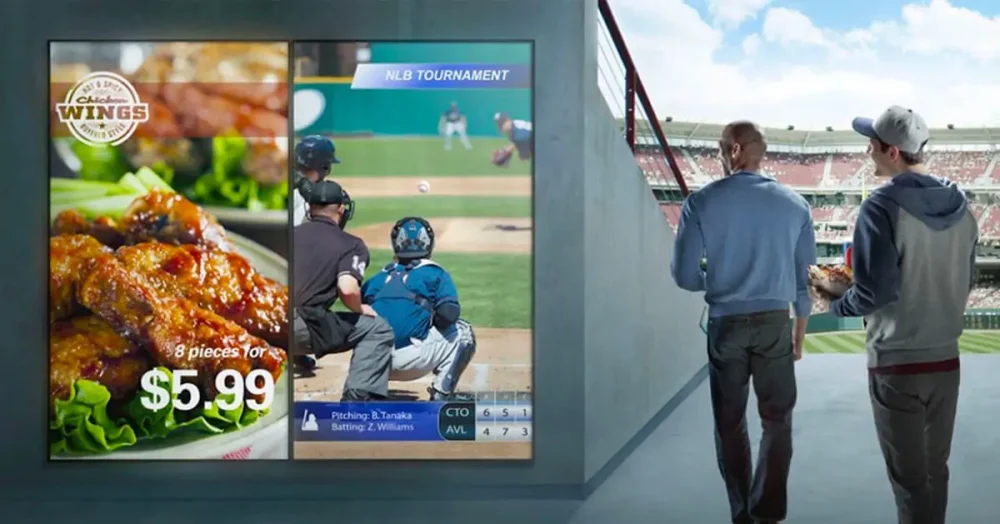
Positioned in the sidewalks and congregation areas within the stadium, concourse screens are of vital importance in enriching the overall experience of the fans. These screens serve multiple functions. They are utilized to offer wayfinding guidance, which assists attendees in finding their way around the venue. They also display menus and promotional deals at the concession stands to encourage food and beverage sales. Moreover, they showcase live game summaries or other captivating content, ensuring that fans stay engaged and connected even when they are not seated in their places.
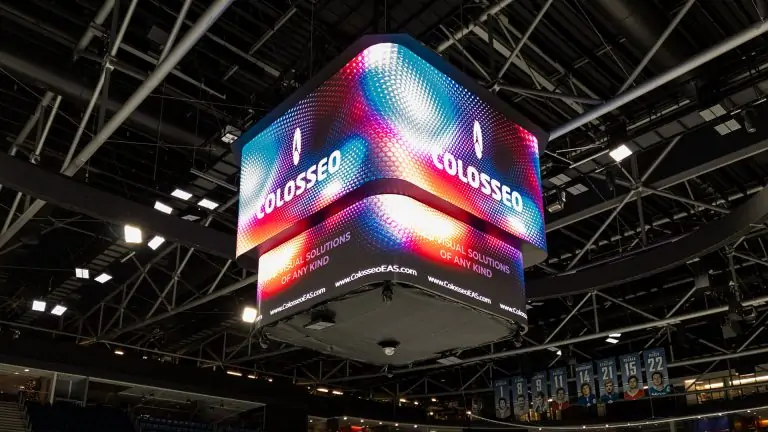
The cube LED screens are hung in the middle or at different key positions inside the stadium, presenting a full 360-degree viewing angle. Fitted with lift adjustment features, they can move vertically to enhance the viewing experience for the purpose of showing advertisements, presenting real-time scores, and broadcasting live game footage, thus ensuring clear visual displays for the fans.
Whether it's the spectacular halftime shows at the Super Bowl or the real-time replays during the World Cup, stadium LED screens are bringing revolutionary changes to the experiences of fans.
This guide will explore this topic from the aspects of the reasons behind its importance and the ways to enhance it. You'll come to understand why it plays a crucial role in stadiums and how to increase your business value with it.
As per the 2024 Statista report, LED displays take up an astonishing 37% of the global budget allocated for stadium technology upgrades, which is way higher than the proportions for sound systems (21%) and seating renovations (15%). Take the Tottenham Hotspur Stadium in the English Premier League as a case in point. Its 360 - degree around - the - court LED screen, which cost $12 million, directly led to a 12% rise in attendance and a $28 million growth in annual sponsorship income.
1.1 A Qualitative Leap in Viewing Experience
The demands of modern audiences for a viewing experience have undergone a qualitative transformation. 65% of the audience consider 4K/8K ultra - high - definition playback an indispensable function. According to a 2023 NFL survey, venues furnished with LED screens that support real - time voting see the audience staying for 23 minutes longer.
1.2 Optimize Event Operations and Commercial Value
(1). Versatile Content Presentation
A single stadium LED screen can meet a variety of usage requirements. Besides live event broadcasts, it can show rotating advertisements, sponsor brand content, and venue safety reminders, thereby cutting down the cost of replacing traditional billboards.It supports 4K/8K ultra - high - definition video playback, making it suitable for non - sports events like opening and closing ceremonies as well as concerts, which enhances the utilization rate of the venue.
(2). Reduce Long - term Operational Costs
Compared with traditional LCDs, LED technology consumes 30% - 50% less energy and has a service life of up to 100,000 hours, which greatly reduces maintenance and electricity costs.The modular design of stadium LED displays makes partial repairs or upgrades easier, preventing the high cost of replacing the entire screen due to local malfunctions.
1.3 Advance the Intelligent Upgrade of Stadiums
When connected to the venue's IoT system, the brightness of the stadium screen can be adjusted automatically (based on changes in ambient light), and customized content (such as welcome messages for VIP seats) can be pushed.The data analysis module can tally the audience's areas of interest (such as playback click - through rates), providing a basis for decision - making in subsequent event operations.
2.1 5G + AI Interaction: Empowering the Audience to Become a 'Director'
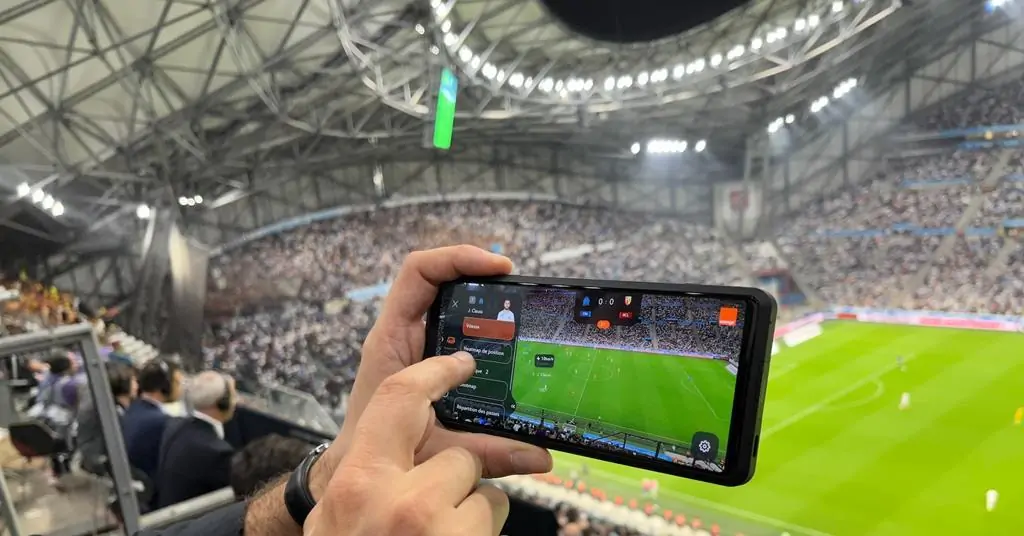
The 5G-A network offers a bandwidth of 10,000 gigabits along with ultra-low latency, enabling the synchronous transmission of 4K/8K images captured by multiple cameras. Spectators can freely switch among different viewpoints, such as the main perspective, close-ups of athletes, or aerial shots, allowing them to capture every single detail.
Simultaneously, the audience can take part in score prediction and vote for the best player through a dedicated app. The results will be instantaneously projected onto the main stadium screen, creating a thrilling atmosphere that links the entire arena together.
When combined with AI, cameras can capture the expressions of the audience and dynamically adjust the interactive content. Moreover, it can precisely capture the movements of athletes at a millimeter level (for example, the rotation angle during diving), generate 3D trajectory diagrams, and conduct scoring analysis, which helps spectators better understand the professional judging standards.
2.2 High Brightness and Clarity
The brightness of stadium LED screens ranges from 5,000 to 10,000 nits, guaranteeing clear visibility even under direct sunlight. With a pixel pitch as fine as P1.2 - P3, it can present sharp 4K/8K picture details for viewers who are at a distance. Advanced technologies like High Dynamic Range (HDR) and a wide color gamut coverage that exceeds 110% of the NTSC standard ensure that the colors are vivid and true to life, and the details are sharp. These aspects are crucial for accurately depicting fast-paced sports actions.
2.3 Ultra-Fast Response and Refresh Rates
For fast-moving sports content like racing or hockey games, the stadium screen can eliminate motion blur. It achieves this with a rapid refresh rate of over 3,840Hz and a response time of less than 0.5ms. Additionally, AI-driven frame rate optimization can enhance lower-quality video sources to 120 frames per second or higher, facilitating seamless slow-motion replays.
2.4 Robust Environmental Durability
Designed to endure various environmental conditions, the stadium LED display complies with IP65/IP67 dust and water resistance standards, ensuring its normal operation even during heavy rain or sandstorms. Its intelligent cooling system enables reliable operation within an extreme temperature range from -30°C to 60°C. The reinforced structural design of the screen allows it to withstand vibrations caused by concert speakers and withstand typhoon-force winds at coastal venues.
2.5 Dynamic Split Screen: Maximizing the Potential of One Stadium Screen
Thanks to Multivision technology, a single stadium LED screen can accomplish multiple functions simultaneously:
(1) 70% of the screen area can be used for real-time broadcasting;
(2) 20% of the area can display sponsored advertisements;
(3) 10% of the area can be used for rolling ticket promotions.
Case in point: The Chase Center Court of the NBA's Golden State Warriors witnessed a 175% increase in advertising revenue within a single season.
In 2024, the global embrace of advanced stadium screen technologies has picked up pace, spurred on by innovations in aspects like resolution, durability, and interactive capabilities. The following are some of the remarkable projects and trends from this year, which have been compiled based on industry developments and the contributions of key manufacturers:
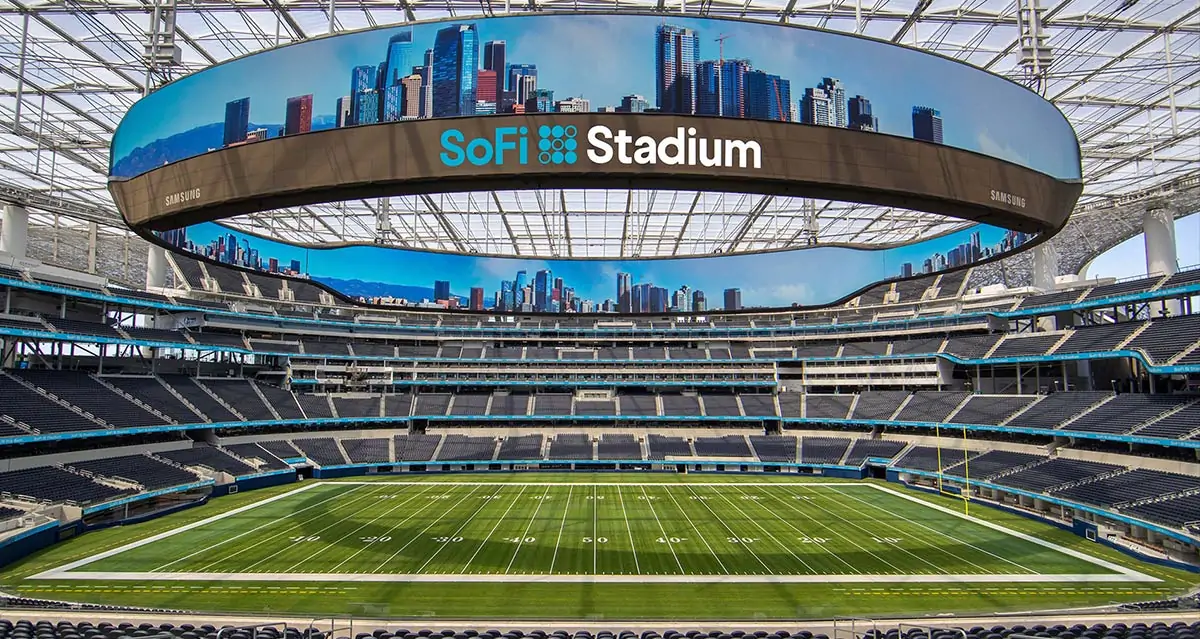
3.1 The Double-Sided Screen at the USA SoFi Stadium
Situated at the heart of the SoFi stadium, the double-sided 360-degree video board stretches across 120 yards and encompasses nearly 80 million pixels. It covers around 70% of the viewers' line of sight. Notably, the USA SoFi stadium stands out as the sole broadcasting facility capable of transmitting 4K HDR content throughout its entirety
3.2 The LED Canopy in the Las Vegas Stadium
With its trial designs having been revealed in early March, this newly constructed stadium in Las Vegas has seen the involvement of HNTB and BIG companies in its planning, architecture, and design. The ballpark, which has a seating capacity of 33,000 people, adopts the world's largest cable-net glass window roof design. Additionally, it features a massive, curved LED screen that spans over 1,600 square meters, making it the largest screen in Major League Baseball (MLB).
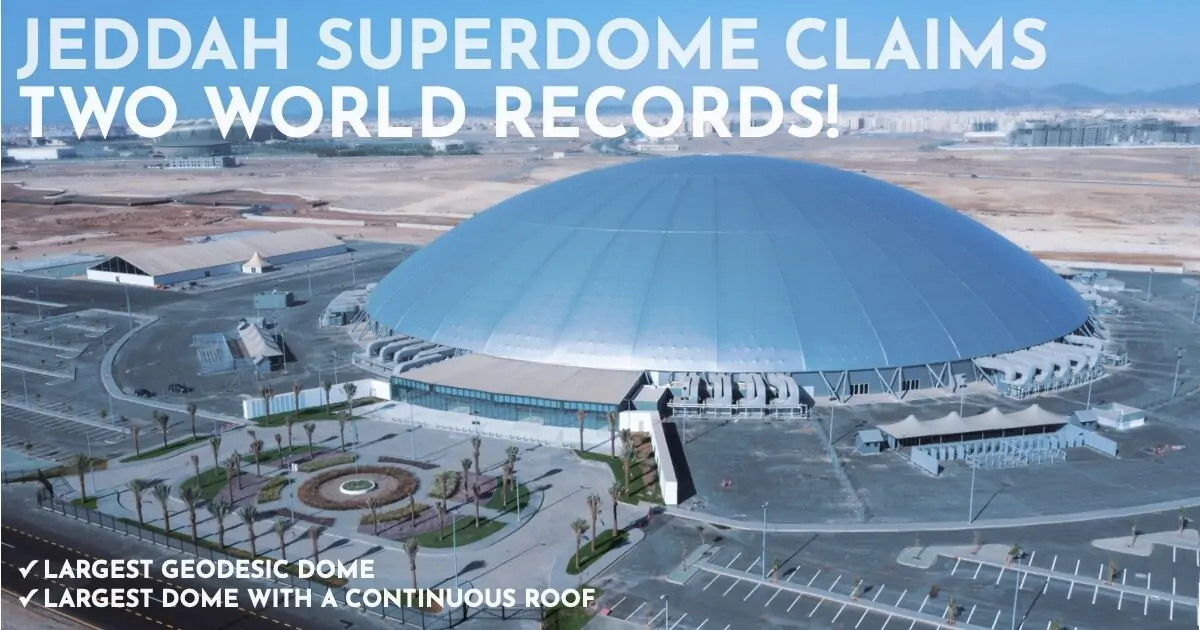
3.3 The Jeddah Super Dome in Saudi Arabia
The Jeddah Superdome is an absolutely breathtaking venue that can host a wide variety of sports events. It is located in Saudi Arabia. With a diameter of 210 meters (690 feet), a height of 46 meters (151 feet), and a covered area of 34,636 square meters, the Jeddah Superdome has instantly gained prominence for shattering the records of two building structures. It has surpassed the Caesars Superdome to become the holder of the record for the largest continuous dome (one that is neither segmented nor openable). Moreover, it now claims the title of the world's largest geodesic domed structure.
When choosing a perimeter LED display, it's essential to give priority to the following crucial factors to guarantee top-notch performance, cost-effectiveness, and enhanced audience engagement:
4.1 Core Specifications
There are three primary specifications that merit your attention. Firstly, a 4K/8K resolution along with a refresh rate of ≥3840Hz is necessary to ensure smooth and seamless displays of live-action content. Secondly, a brightness level of 10,000+ nits is required for excellent visibility even under direct sunlight. Lastly, opting for modular designs can simplify the maintenance process.
4.2 Operational Effectiveness
You need to assess the energy consumption and carefully consider the long-term maintenance expenses, making sure they align with your budgetary limitations. Incorporating smart control platforms can be advantageous as it enables quick real-time monitoring, remote troubleshooting, and effortless content switching.
4.3 Viewing Experience
Horizontal and vertical viewing angles that are ≥160° can effectively eliminate viewing blind spots and guarantee clear visibility from various angles. Through pixel-by-pixel calibration, curved or flexible stadium LED displays can offer high consistency in color and brightness, presenting clear and vivid images to sports fans.
4.4 Environmental Resilience
The IP rating is a critical factor for stadium LED screens. For instance, an IP65/IP67 waterproof rating is appropriate for outdoor stadiums, particularly those in areas prone to monsoons or located along the coast. The waterproof rating for indoor sports LED displays should generally meet the IP54 standard. Additionally, the stadium screen should be equipped with an active cooling system to ensure normal operation within an environment ranging from -30°C to 60°C.
4.5 Cost-Effectiveness and Maintenance
The stadium screen should support both front and rear maintenance designs and utilize a modular design for swift module replacement. By incorporating built-in energy-saving drivers, the power consumption of LED screens can be cut down by 30 - 40%. With a long lifespan of ≥100,000 hours, the stadium display can avoid the need for frequent replacements, thereby maximizing your business value.
When it comes to choosing the best LED display supplier, price isn't the primary factor that should be taken into account. A dependable LED screen supplier ought to ensure high-quality products, offer professional technical support, and provide excellent customization services.
5.1 Confirm Industry Experience and Certifications (Step 1)
Industry Experience: Examining their past successful LED display projects, particularly those involving large LED screens, will provide you with an understanding of their proficiency and standing within the LED display industry.
Product Certifications: A professional LED screen supplier should possess relevant industry certifications to guarantee that their products meet market requirements.
ISO 9001/14001: These certifications pertain to quality and environmental management.
DCI-P3 Color Compliance: This is essential for achieving broadcast-grade color accuracy.
UL/CE/FCC Certifications: These are related to ensuring safety and electromagnetic compatibility.
5.2 Examine Product Quality and Customization (Step 2)
Pay close attention to aspects such as brightness, pixel pitch, resolution, and durability to ensure sharp and high-definition images. You can pose questions to your supplier like “What is the MTBF (Mean Time Between Failures) for your LED modules?” (Ideally, it should be ≥100,000 hours), or “Can you supply P1.2 – P3 screens suitable for close-up viewing or P4 – P10 screens for displays viewed from a long distance?”
Furthermore, you can also communicate your specific requirements for stadium LED screens and inquire whether they can customize a particular LED perimeter board according to different sizes, shapes, and installation methods.
5.3 Assess Total Cost, Logistics, and After-Sales Service (Step 3)
Cost transparency enables you to have a clear understanding of the total cost budget, which encompasses expenses from customization, customs clearance, transportation, and so on. Timely delivery is equally significant. Hence, you should evaluate the supplier's ability to complete the project without any delays.
Make sure that the supplier provides a comprehensive range of reliable after-sales services. This should cover everything from the installation process to continuous maintenance. Reputable suppliers will offer warranties and ensure prompt repairs in the event of any issues.
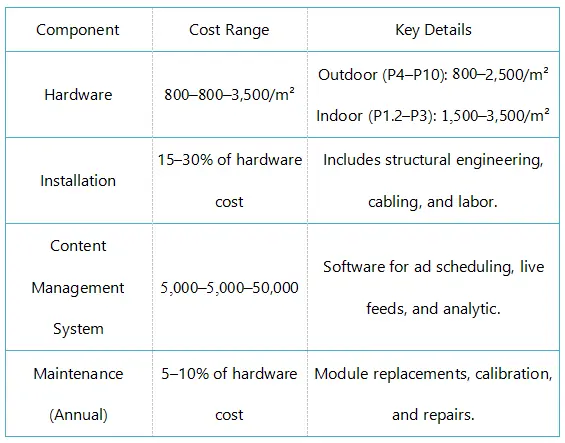
When making an investment in stadium LED screens, it's crucial to strike a balance between the initial outlay and the long-term revenue-generating potential. The following presents an in-depth exploration of the cost elements and the drivers of return on investment (ROI) to help you maximize your returns.
6.1 Cost Elements of Stadium LED Screens
The Overall Cost of Stadium LED Screens
6.2 Primary ROI Drivers
(1). Direct Revenue: Maximizing Advertising Revenue
Scenario-Based Pricing: Advertising rates have the potential to soar by as much as 300% during international events when compared to regular daily event sessions.
Precise Placement: Tailor advertising placements to meet the specific requirements of advertisers based on viewer demographics (such as age and interests) in order to boost conversion and repeat purchase rates.
Dynamic Content: Incorporate real-time elements like scores, sponsor logos, and more into advertisements to make them more relevant for each event.
Regionalized Stadium LED Pricing: The pricing of stadium LED screens varies by region, depending on factors such as location, specific types of stadium screens, and the level of audience engagement.
(2). Indirect Revenue: Tickets, Rentals, and Partnerships
Event Rentals: Lease the venues to event organizers, including those hosting concerts, e-sports competitions, corporate functions, and sports events.
Ticket Sales: Improved visual displays (for instance, 8K replays and real-time statistics) can enhance fan loyalty and drive up ticket demand. For example, attendance at venues equipped with advanced technology can increase by 10 - 15%.
Broadcast Partners: High-quality LED backdrops can attract premium broadcast agreements. For example, venues enabled with 4K/HDR capabilities can see a 20% increase in their value.
6.3 Case Studies
a. Camp Nou (in Barcelona) witnessed an 18% boost in matchday revenue following the installation of 360-degree 8K displays.
b. The SoFi Stadium in the USA has been generating $12 million annually from LED advertising partnerships since its upgrade in 2020.
Stadium LED screens are capable of conferring a host of benefits upon stadiums, event organizers, and fans alike by enriching the overall experience and augmenting functionality. Here are the benefits that a stadium screen can provide:
7.1 Enriched Audience Experience
Live replays, real-time statistics, and fan surveys keep spectators interested and involved. Clear and vivid visuals, along with interactive elements, heighten the excitement level, converting passive onlookers into active participants throughout the course of the games.
7.2 Amplified Brand Exposure
Dynamic advertisements, sponsor logos, and targeted promotional materials dominate the viewers' field of vision. High-profile events guarantee that brands can reach audiences on a global scale, tripling the recall rates compared to traditional billboards.
7.3 Revenue Generation
You can sell advertising slots, promote ticket sales, or collaborate with sponsors. Digital advertising campaigns outperform static ones, achieving 25% higher engagement levels thanks to real-time content updates that create a sense of urgency.
7.4 Excellent Visibility
Thanks to their high brightness and anti-glare coating, stadium LED screens make certain that all audiences can clearly see every significant moment, such as fan interactions, game highlights, and replays.
7.5 Heightened Fan Engagement
Perimeter LED screens can showcase content generated by fans, like social media posts and live polls, thereby creating an immersive and interactive environment. This motivates attendees to engage with the event in fresh and creative ways.
It is anticipated that by 2025, the global transparent LED screen market will witness rapid growth, driven by stadium upgrades in preparation for major events such as the 2026 FIFA World Cup and the 2028 Los Angeles Olympic Games. In this section, we will explore their potential applications and the benefits they can bring in 2025.
8.1 Elevated Advertising and Brand Integration
Transparent LED screens are bringing revolutionary changes to stadium advertising. They can integrate digital content with architectural elements in a seamless manner. While allowing natural light to pass through, they are also able to display dynamic advertisements or sponsor messages on glass facades or railings, without giving the “clunky” appearance that is typical of traditional displays. This makes them the optimal choice for venues that place a high emphasis on aesthetics, like modern stadiums with glass curtain walls.
8.2 Architectural Adaptability and Space Optimization
Transparent LED displays are characterized by a lightweight and modular design. This enables them to conform to curved or irregular surfaces (such as stadium domes or concourses) without imposing excessive load on the structure. Their front-end maintenance functionality permits quick repairs during events, thus reducing downtime to a minimum. Moreover, their slender design safeguards the viewing experience of spectators, which is of great significance in crowded venues.
8.3 Audience Engagement and Event Enhancement
With a high brightness level of 10,000+ nits, transparent LED screens can ensure excellent visibility even under direct sunlight. They can support real-time replays and fan interactions. Thanks to their refresh rates of 3840Hz and above, these screens can present smooth and clear slow-motion visuals for an instant replay system, thereby enhancing the immersive experience for the audience.
8.4 Challenges and Market Uptake
Although transparent LED displays possess numerous advantages, their cost is higher than that of traditional LED screens. This might hinder their adoption in smaller venues. Due to durability problems during adverse weather conditions (for example, the need for waterproof seams on grid screens), suppliers are expected to come up with more robust designs. Nevertheless, the demand for advanced, branded technology continues to rise in high-end stadiums.
9.1 What is the Power Consumption Standard of Stadium LED Screens?
The typical range is around 200–800W/m².
Outdoor screens: 300–800W/m² (high brightness).
Indoor screens: 200–400W/m² (lower brightness).
9.2 How to Avoid the Reflection Problem of Stadium Screens in Strong Light?
High-brightness LEDs (≥10,000 nits) combined with anti-reflective coatings and matte surface treatments ensure visibility in direct sunlight. Angled screen installations further minimize glare from overhead or lateral light sources.
9.3 What is the Best Pixel Pitch of LED Perimeter LED Display?
P3–P6: Suitable for close-proximity areas (e.g., VIP seating) to deliver ultra-high resolution.
P8–P10: Cost-effective for perimeter boards where audiences are 15–30 meters away, balancing clarity and budget.
9.4 How Does the Sports LED Display Synchronize the Match Data in Real Time?
Sports LED displays integrate with data systems via APIs or dedicated software (e.g., XML/JSON feeds) to sync live scores, player stats, and timing.
This article has furnished you with valuable information regarding stadium LED screens. It can assist you in identifying the top LED display supplier and making smart investment decisions to optimize your business value. However, there's nothing more beneficial than receiving advice directly from an expert in the LED screen supply field. Get in touch with us to obtain free samples and the latest price quotations.

Professional Integrated LED Display Solution Provider
 EN
EN
