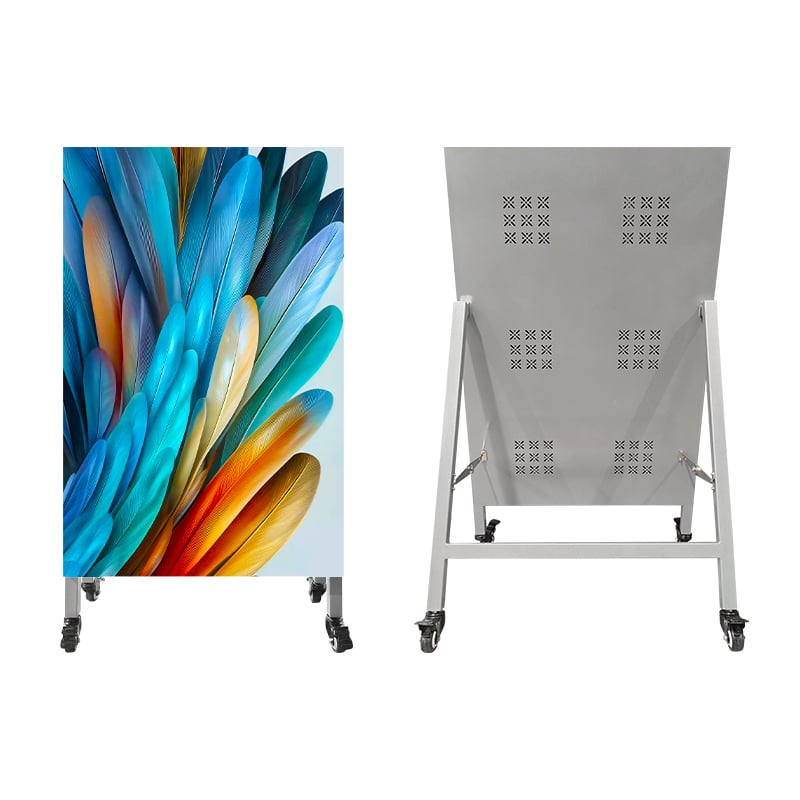
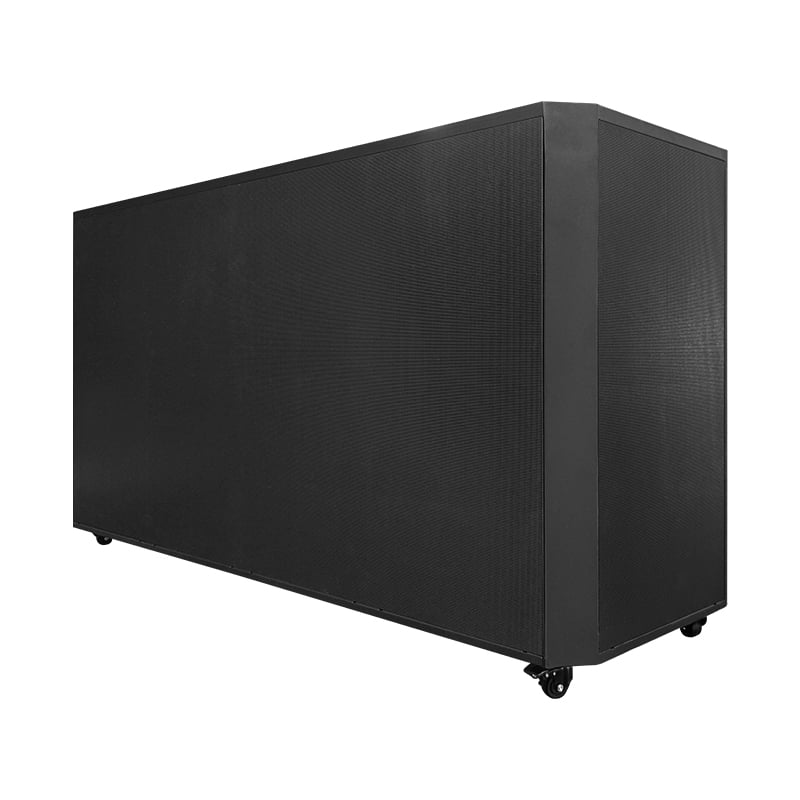
P1.2GOB Indoor LED Poster Screen | One-Sided Fine Pitch Display
Single-sided P1.2 GOB LED poster screen with 640×1920mm slim cabinet. Ultra-fine pixel pitch for close-range retail, corporate, and control room display. Factory direct.
At one millimeter between pixel centers, this is the point where a display stops looking like a screen and starts looking like a printed poster — except it moves, changes, and updates instantly.
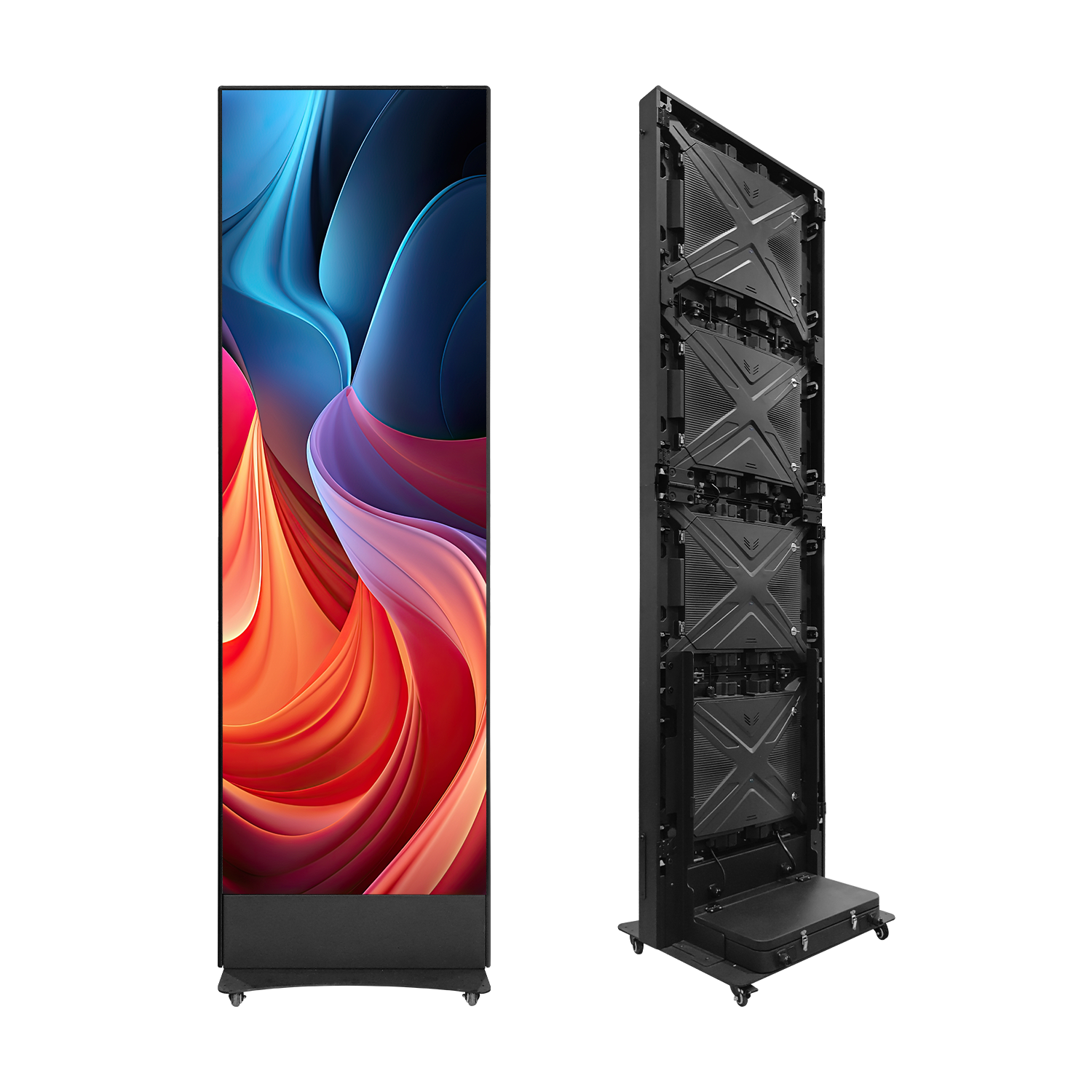
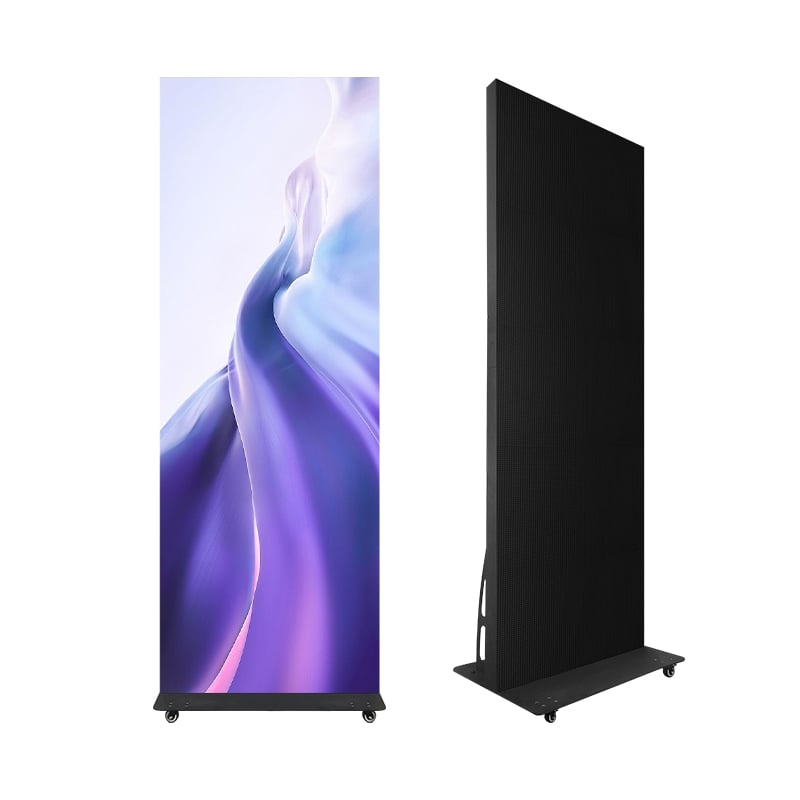
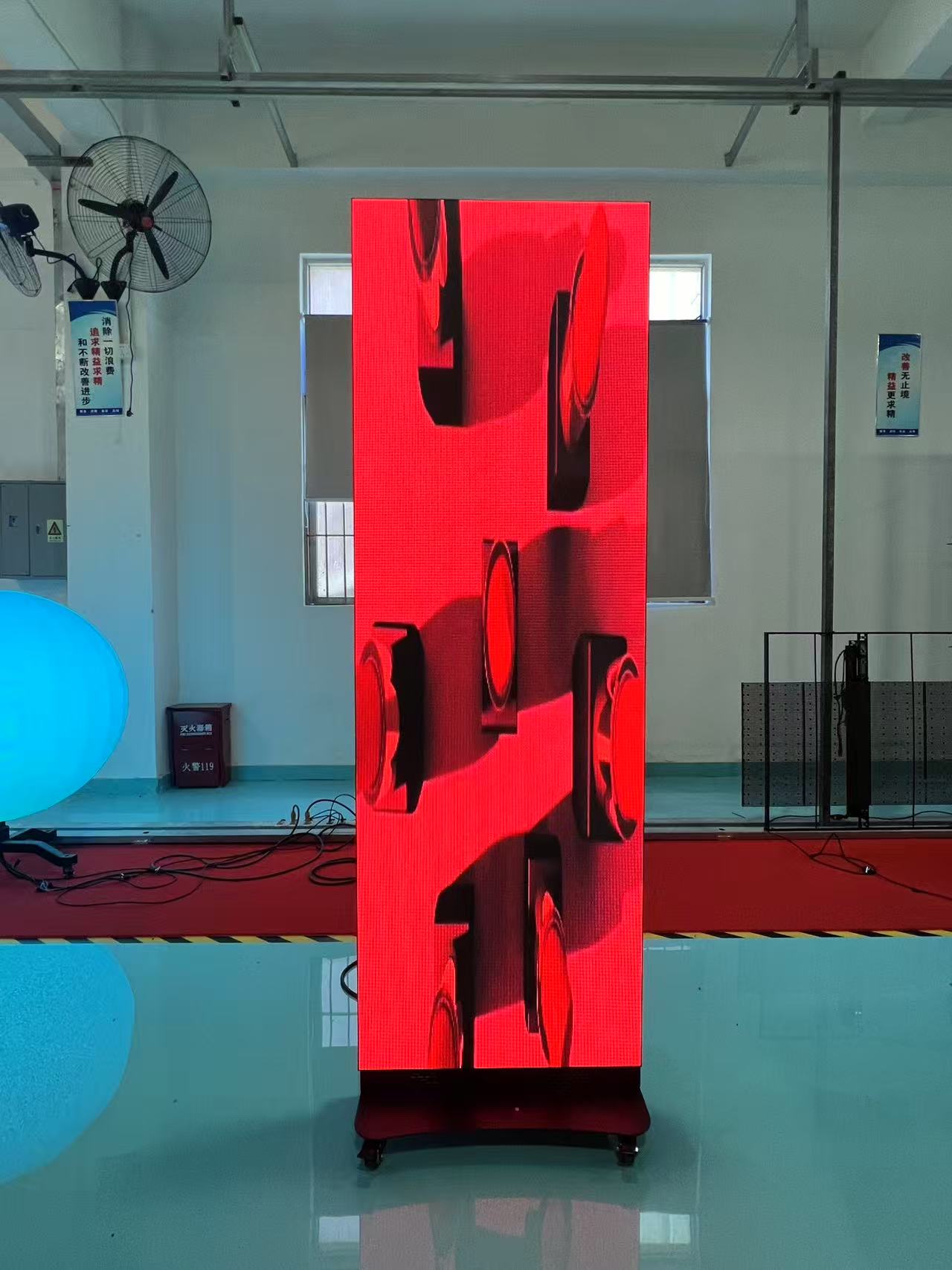
The 640×1920mm cabinet format is designed specifically for portrait-orientation signage: tall, slim, and narrow enough to fit in spaces where a wide panel would not work. A standalone unit in a boutique entrance. A pair of panels flanking a hotel lobby counter. A row of them running down the length of a corporate corridor. The form factor is deliberate, not incidental.
GOB (Glue-on-Board) encapsulation covers the entire LED surface with an optically clear epoxy layer. This is not a screen protector film added on top — the resin is bonded directly over the LED chips during manufacturing. The result is a hard, seamless surface that handles incidental contact, cleaning solvents, and ambient humidity without the LEDs underneath being affected.
P1.2 Pixel Pitch — Why It Matters at Close Range
Pixel pitch is the gap between LED centers. At P1.2, that gap is one millimeter. For indoor use, the practical implication is straightforward: the minimum comfortable viewing distance is roughly one meter. Stand closer than that and you can begin to resolve individual pixels. Stand at a meter or more and the image reads as continuous.
For a retail display that customers approach closely, or a conference room screen that people sit near, this matters in a way that a P2.5 or P3 screen simply does not. The same content that looks acceptable on a P3 panel at three meters starts showing visible pixel structure at one meter. P1.0 does not have this problem within its design range.
The trade off is cost and power — fine pitch panels are more expensive per square meter than coarser panels, and they consume more power for the same surface area. If your viewing distance is consistently more than four or five meters, P1.2 is not the right specification and we will tell you so.
GOB Encapsulation — What It Actually Changes
Standard SMD LED displays mount the LED chips on a PCB with individual silicone or epoxy lenses over each chip. The chips themselves are exposed between the lens elements. This works well in stable, clean environments, but creates vulnerability at the module surface.
GOB encapsulation changes the surface entirely. A single layer of optically clear resin is applied across the full module face, filling all the gaps between LED chips and covering the entire array. Once cured, the surface is one continuous solid piece.
In practice this means:
Impact resistance: a coin, a ring, a briefcase corner — all things that routinely crack conventional SMD modules — bounce off without damage. This matters particularly for ground-level or low-mounted displays in retail environments.
Dust and moisture: the resin layer has no gaps for particulates to enter. In environments where air quality is inconsistent — food courts, transit hubs, light-industrial showrooms — this reduces the failure rate of individual LEDs significantly.
Cleaning: the surface can be wiped with a damp cloth or mild cleaning agent without any concern about moisture reaching the LED components.
Color consistency over time: conventional SMD modules can develop subtle color drift as individual lenses yellow or micro-crack. GOB encapsulation slows this substantially.
The trade off is heat management — the resin layer adds slight thermal resistance. We select driver ICs and power supply configurations that account for this to maintain stable operating temperatures across the full brightness range.
Cabinet Design and Installation
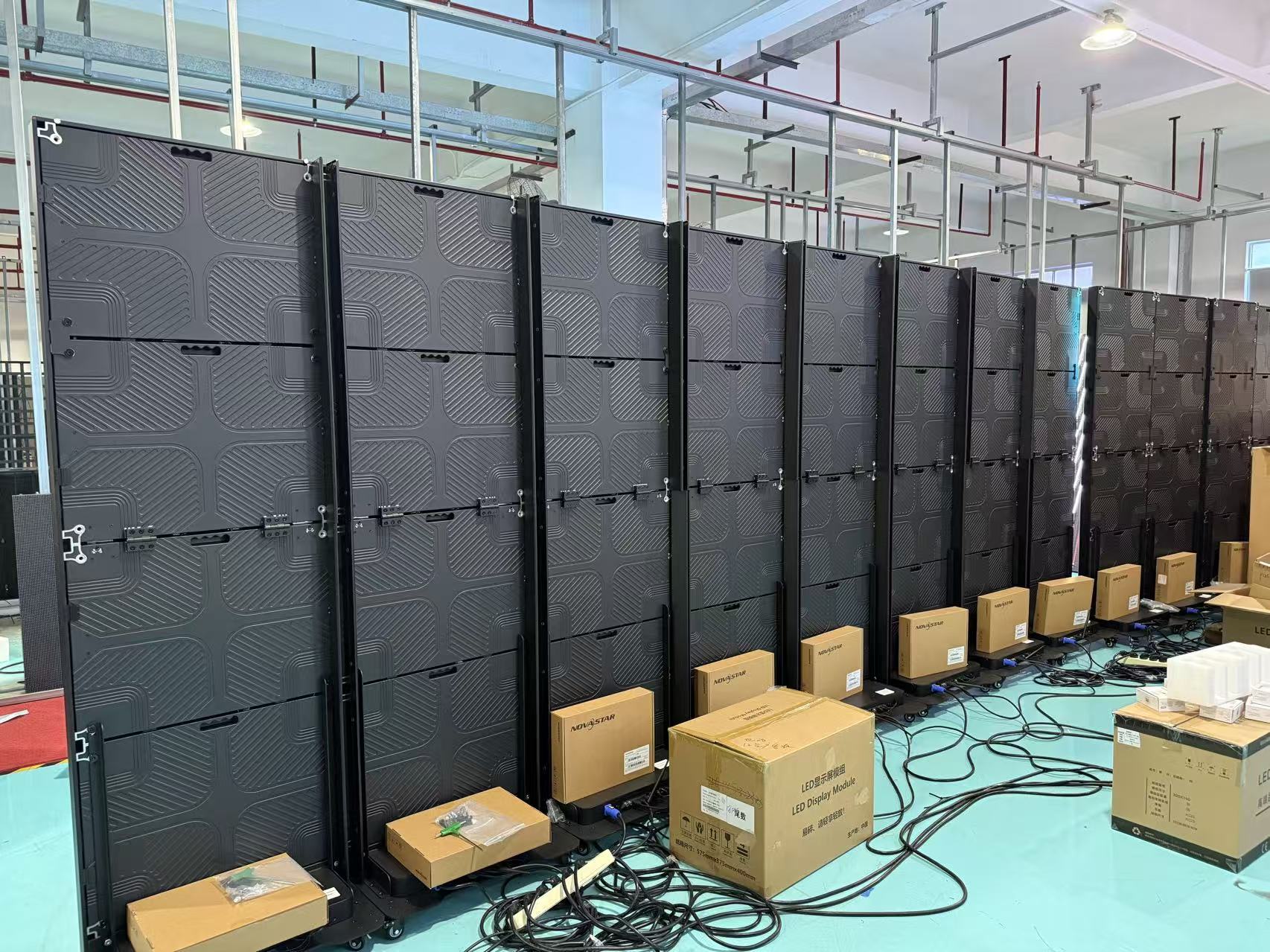
The die-cast aluminum cabinet is 640mm wide and 1,920mm tall. It is front-service only — all maintenance access, including module replacement, is from the front face. For wall-mounted installations this eliminates the need for access space behind the display, which in many retail and hospitality environments simply does not exist.
The modular panel array within the cabinet is flat to within 0.5mm across the full face. There is no visible seam grid when the display is on.
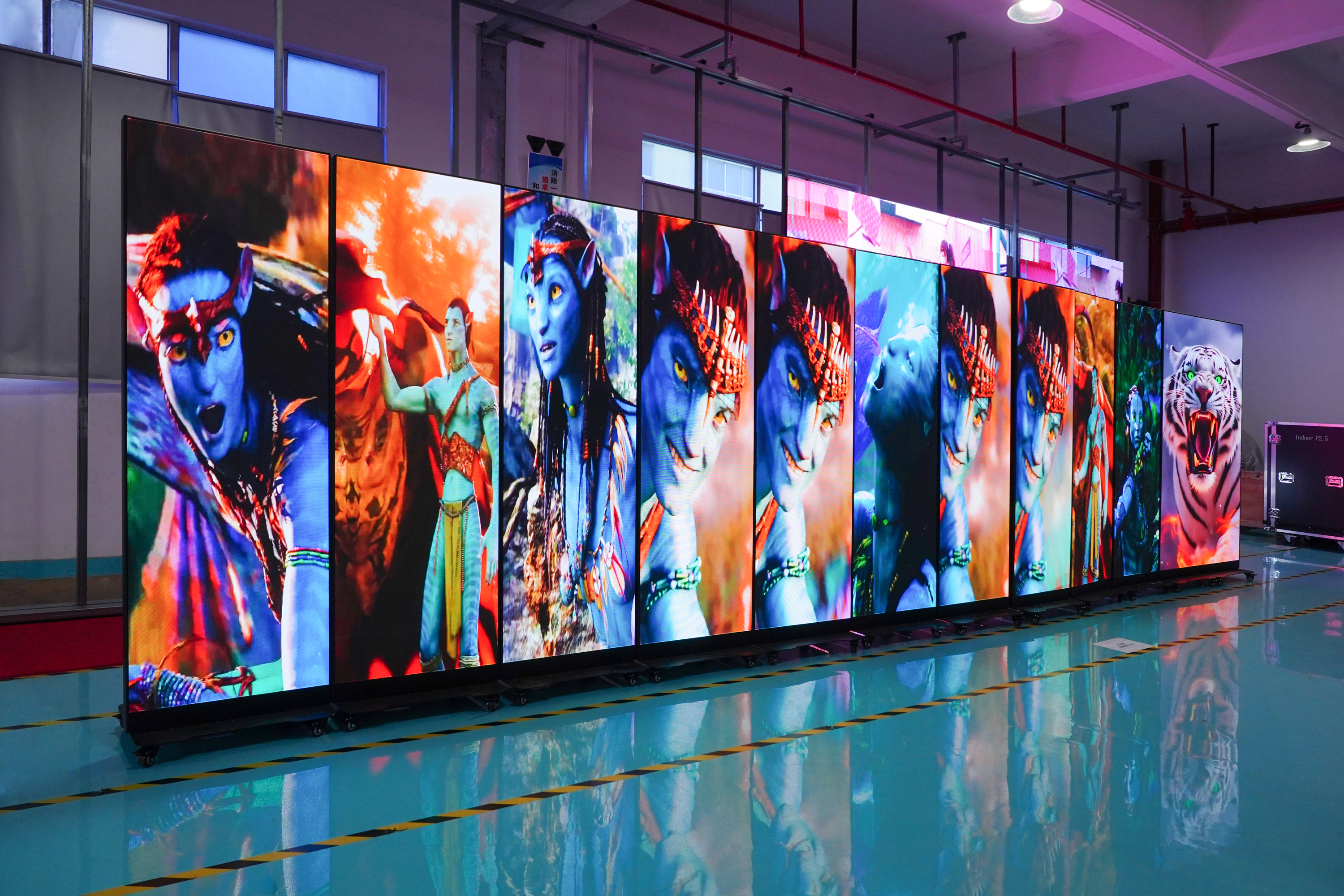
Mounting is standard wall-bracket with a leveling adjustment, or custom structural integration on request. Cabinets can be arranged side-by-side to create a wider multi-panel installation while maintaining a single continuous image surface.
Technical Specifications
Parameter
Specification
Pixel Pitch
P1.2 (1.2mm)
LED Technology
GOB (Glue-on-Board) encapsulation
LED Type
Fine pitch indoor SMD
Cabinet Size
640 × 1,920 mm
Brightness
600 – 1,000 nits
Refresh Rate
≥3,840 Hz
Viewing Angle
160° horizontal / 160° vertical
Grayscale
16-bit
Surface Protection
GOB optical resin coating
Cabinet Material
Die-cast aluminum
Maintenance Access
Front service
Installation Method
Wall-mounted / fixed
Lifespan
100,000+ hours (rated)
Control System
Synchronous (Nova Star / Linsn compatible)
Where This Screen Is Used
-Retail and brand showrooms: At standing distance, P1.2 renders product imagery and brand photography with enough detail that color accuracy and surface texture read correctly. Commonly used for flagship store window displays, in-store feature walls, and high-end product display areas.
-Corporate reception and lobbies: A single tall panel creates a strong visual focal point without dominating the architecture. Multiple panels can create a video wall or a sequential display along an entry corridor.
-Conference rooms and board rooms: At a table width of one to two meters, P1.2 is the minimum pitch that avoids visible pixel structure. Used for presentations, video calls, and data visualization on a fixed wall installation.
-Command centers and control rooms: These environments demand continuous operation, consistent color calibration, and low failure rates. GOB encapsulation's physical durability and the 100,000-hour rated lifespan are directly relevant here.
-Airports, museums, and exhibition venues: The seamless surface and portrait form factor work well for way-finding panels, digital art installations, and high-traffic informational displays.
Available Pixel Pitch Options
-If P1.2 is finer than your application requires, or coarser than your application demands, we produce the full range of indoor fine-pitch panels:
-P0.7 / P0.9: for very large screen sizes or situations where viewers approach within 50–80cm; often used in broadcast studios and virtual production
-P1.0/P1.2: this panel — optimal for 1–3m viewing distances
-P1.25 / P1.5: one step coarser, lower cost, better suited for viewing distances of 2–5m
We can advise on the right specification based on your screen size, room dimensions, and content type.
Frequently Asked Questions
Can GOB panels be repaired if a module fails?
Yes. The GOB resin is applied at the module level, not across the entire panel. If a module needs replacement, it is removed and swapped the same way as a conventional module. The front-service design means this can be done without removing the display from the wall.
What content management system is compatible?
We configure panels with NovaStar or Linsn control cards as standard. These are compatible with most professional content management software, including Nova Designer, VNNOX cloud, and standard video signal inputs (HDMI, DVI). If you use a proprietary CMS, let us know the signal format and we will advise on compatibility.
How does brightness of 600–1,000 nits compare to a TV or consumer display?
A typical office monitor runs at 250–350 nits. Consumer TVs peak at 400–600 nits for SDR content. At 600–1,000 nits, this panel is significantly brighter than ambient commercial environments, which means it holds visibility under strong overhead lighting without washing out. We can also adjust the brightness profile to reduce power consumption in lower-ambient spaces.
What is the minimum order quantity?
Single panels can be ordered for evaluation. Most installations require between 2 and 20 panels. Large-scale projects with custom dimensions are standard — we do project-based manufacturing, not only catalog quantities.
Can multiple panels tile into a wider display?
Yes. Panels are designed with precision-machined edges so that the gap between adjacent cabinets is visually consistent. With standard bezels, the inter-cabinet gap is less than 0.5mm, which is not perceptible in normal viewing conditions.

 EN
EN