 EN
EN

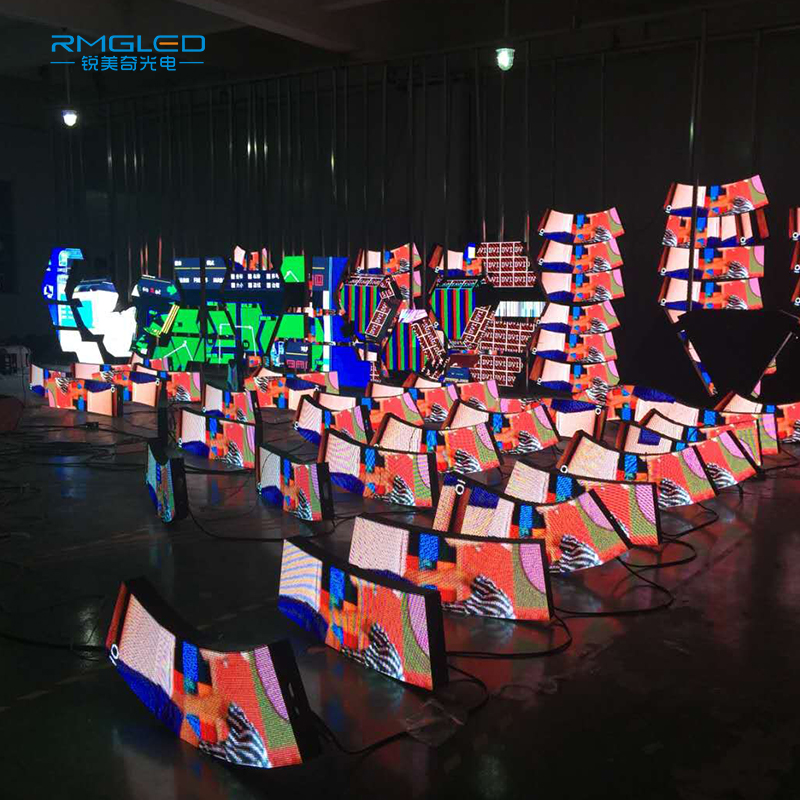
Why Do More Companies Prefer LED Display for Their Advertising Campaigns?
The European division of a global automotive brand maintained a network of 200 dealer showrooms, each equipped with a 3-meter-wide printed fabric banner above the entrance and four interior lightbox displays showcasing current models. The annual cost of producing, printing, shipping, and installing updated banners across the network — required 4-6 times per year to match model launches and seasonal promotions — reached 480,000 euros. Creative lead time averaged 5 weeks from agency approval to physical installation, meaning promotional campaigns launched on printed banners 35 days after the digital and broadcast versions of the same campaign went live. The time lag meant showroom visitors saw outdated visuals during the highest-traffic launch weeks. The brand converted 80 showrooms to LED display systems — P2.5 indoor fine-pitch screens — in the first phase. Content was updated simultaneously across all 80 locations in under 90 seconds via a centralized cloud platform. The annual content production cost dropped to approximately 65,000 euros, and campaign launch synchronization eliminated the 5-week lag. The hardware investment — approximately 1.2 million euros for 80 installations — achieved full payback within 2.7 years through eliminated printing and logistics costs alone.
The accelerating corporate preference for LED display technology in advertising reflects a fundamental shift in how businesses calculate the cost of customer communication: the relevant metric is no longer the upfront hardware price but the total cost per thousand impressions over the display's operational lifetime.
Technical Advantages Driving Adoption
The technical characteristics that make LED display systems superior to legacy advertising formats are rooted in semiconductor physics and modular mechanical design rather than incremental improvements to print-based processes.
The first advantage is brightness range. An indoor LED display rated at 800-1,500 nits remains clearly visible in well-lit retail environments where ambient light from store windows and overhead lighting can reach 500-1,000 lux. The adjustable brightness — typically spanning a 0-100% range in 256 or more discrete steps — allows the display to be dimmed to 200-300 nits for ambient evening environments without losing color accuracy, because the LED driver ICs maintain consistent current ratios across color channels through the full dimming curve. This dynamic range is unavailable in printed signage, which reflects ambient light at a fixed proportion.
The second advantage is the refresh rate. Professional LED display systems operate at a refresh rate of at least 3,840Hz — meaning each LED pixel is updated 3,840 times per second. The practical significance is invisible to the human eye but critical in two commercial scenarios: when the display content is filmed by broadcast cameras — scan-line artifacts at lower refresh rates appear as rolling dark bands in video footage — and when content includes fast-moving graphics — refresh rates below 1,920Hz can produce perceptible flicker in peripheral vision, causing viewer discomfort during extended viewing. The high refresh rate is achieved through dedicated driver ICs that use PWM at 3,840Hz or higher, combined with grey-scale processing at 14-16 bits to maintain smooth tonal gradients without banding.
The third advantage is seamless splicing. Traditional LCD video walls — built by arranging multiple 46-inch or 55-inch LCD panels in a grid — create visible bezel gaps of 1.7-3.5mm between each panel, which fragment continuous images into visibly separated tiles. An LED display has no bezel: each LED module — typically 250mm by 250mm or 500mm by 500mm — mates with adjacent modules at the pixel level, and the module-to-module seam is no more than 0.1mm, which is smaller than a single pixel at common viewing distances. The result is a truly seamless image surface of any size — a 2-meter by 6-meter corporate lobby screen or a 20-meter by 10-meter outdoor stadium display — built from identical modular units, each individually serviceable from the front or rear.
The Economic Equation
The economic case for LED display adoption can be reduced to a total cost of ownership comparison over a 7-year period. For a typical retail chain operating 50 store locations, each requiring a 2m by 1.5m promotional display, the TCO analysis runs as follows. Static signage: 6 campaigns per year times 50 locations at 200 per print and install cycle equals 60,000 annual production cost plus 12,000 annual labor for physical installation changes, totaling 72,000 per year. Over 7 years, the total is 504,000. The **LED display** alternative: 50 installations at 3,500 per unit — P2.5 indoor fine-pitch, including mounting hardware and installation — equals 175,000 hardware cost plus 8,000 annual content production in-house plus 3,000 annual cloud platform subscription plus 4,000 annual electricity — 50 displays at 500W average times 12 hours times 365 days at 0.12/kWh — plus 5,000 annual maintenance allocation, totaling 175,000 plus 140,000 over 7 years equals 315,000. The **LED display** approach saves 189,000 over the comparison period while delivering real-time campaign synchronization, dynamic video content, and the ability to run multiple ad rotations per day — capabilities that static signage cannot provide at any cost.
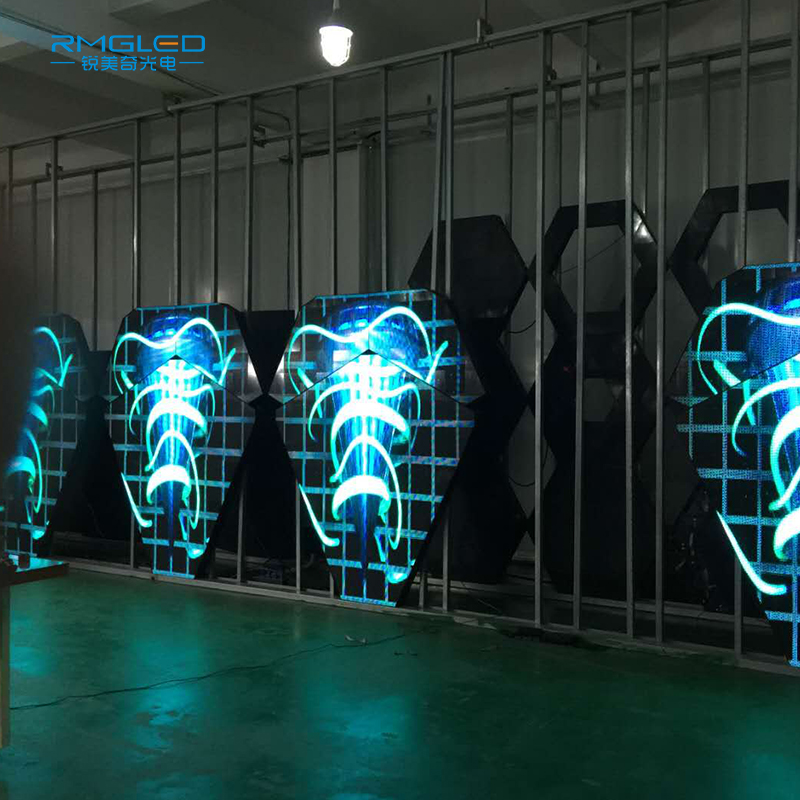
Deployment Across Corporate Environments
Corporate adoption of LED display technology spans four primary deployment formats. Retail environments use fine-pitch indoor displays — P1.5-P2.5 — at 800-1,200 nits in storefront windows, above checkout counters, and as video walls in flagship stores; the tight pixel pitch ensures image clarity at the 2-4 meter viewing distances typical of retail spaces. Corporate lobbies and reception areas deploy large-format video walls — P2.5-P3.9 — that serve dual purposes: brand storytelling and visitor impression management. Trade show and exhibition booths use rental-grade LED display systems with quick-lock modular assembly, IP65 protection for indoor/outdoor flexibility, and lightweight die-cast aluminum cabinets that two technicians can assemble in under 4 hours for a 15-square-meter wall. Outdoor corporate signage — building identification, parking guidance, drive-through menu boards — uses outdoor-rated LED display panels at 5,000-8,000 nits with IP65 front protection, typically at P4-P10 pixel pitches calibrated to viewing distances of 5-50 meters.
Standard references informing proper installation include ISO 9001 quality management certification ensuring consistent manufacturing, CE and FCC compliance for electromagnetic compatibility preventing interference with nearby electronic equipment, and RoHS compliance confirming the absence of hazardous substances — all certifications that professional LED display manufacturers hold and that procurement teams should verify before purchase.
Selection and Maintenance
Purchasing guidance for corporate LED display deployments should focus on: verifying the LED package type and pixel pitch match the installation's viewing distance; confirming the refresh rate is at least 3,840Hz for content likely to be filmed; requesting the calibrated brightness specification rather than the theoretical maximum; and ensuring front-access maintenance capability for wall-mounted installations where rear access is unavailable. Maintenance protocols include monthly dust cleaning with anti-static microfiber cloths for indoor displays, quarterly professional inspection of power supply health, and annual firmware updates and color calibration to compensate for differential LED aging across modules.
Frequently Asked Questions
What is the difference between LED display and LCD video wall?
An LED display uses individual LED chips as self-emitting pixels — each pixel produces its own light — eliminating the need for a backlight and enabling true black by switching off individual pixels. An LCD video wall uses a backlit liquid crystal panel and has visible bezel gaps of 1.7-3.5mm between panels. LED displays offer higher brightness, seamless images at any size, and wider viewing angles exceeding 140 degrees horizontally compared to LCD walls.
How long does an indoor corporate LED display last before replacement?
LED modules in indoor corporate displays — operating at 800-1,200 nits for 12 hours daily — typically maintain at least 80% brightness at 60,000-80,000 hours, equivalent to 13-18 years of corporate use. The power supplies and receiving cards have shorter service lives at 50,000-60,000 hours and may require replacement at the 10-12 year mark, which can be done module-by-module without replacing the full display.
Can LED displays show the same content quality as printed signage for fine detail?
Fine-pitch LED displays with pixel pitches of P1.5 or smaller — pixel density of at least 444,444 pixels per square meter — approach print-quality resolution at typical viewing distances of 1.5-2 meters. At P0.9 — the current commercial fine-pitch standard — pixel density reaches 1,234,568 pixels per square meter, exceeding the resolution threshold at which the human eye can distinguish individual pixels.
What is the power consumption of a corporate lobby LED display?
A typical P2.5 indoor LED display consumes 280-380W per square meter at maximum brightness of 1,200 nits and approximately 120-180W per square meter at typical corporate lobby brightness of 400-500 nits. A 4m by 2m lobby display — 8 square meters — operating 12 hours daily at 400 nits consumes approximately 11.5-17.3 kWh per day, costing 1.40-2.10 daily at $0.12/kWh.
How is content managed across multiple LED display locations?
Cloud-based content management platforms enable centralized control of content across unlimited display locations. Content is uploaded to the cloud, scheduled by time, date, and location, and pushed to all displays simultaneously via 4G/5G or Ethernet. The system supports playlist management, emergency alert override, and real-time display health monitoring including temperature, power status, and signal integrity for each unit.
What wall mounting requirements does an indoor LED display need?
A standard indoor LED display with die-cast aluminum cabinets weighs 25-35 kg per square meter. The mounting wall must support this dead load plus a safety factor of 1.5 as specified in local building codes. The wall surface must be flat within 2mm per meter to prevent module misalignment. Installation requires a 100-150mm clearance behind the display for ventilation, cabling, and maintenance access.
