EN
EN

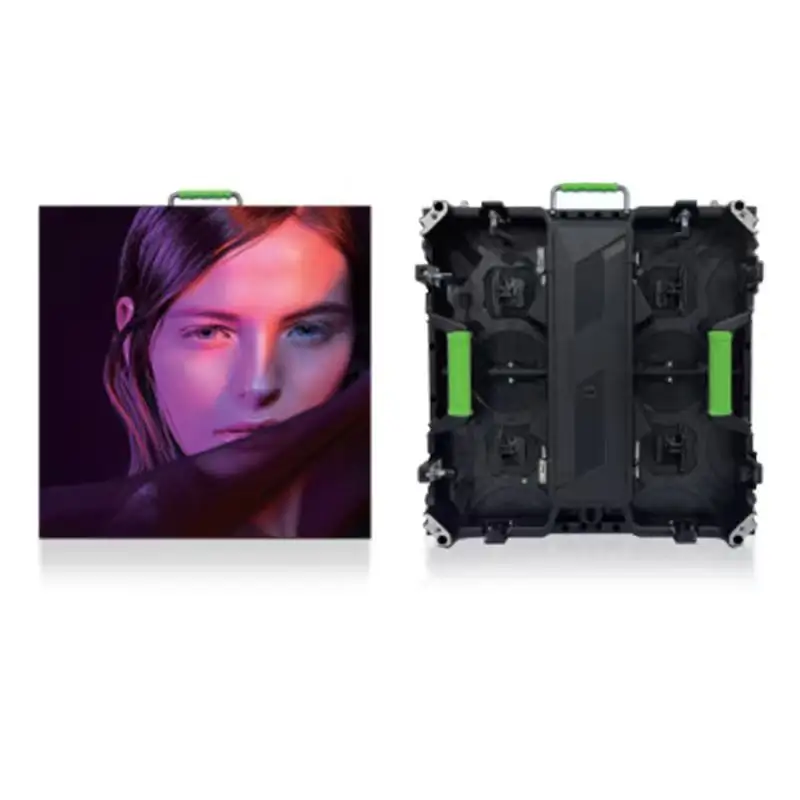
In the high-stakes world of digital out-of-home advertising, control room operations, and live event production, a blank or glitching section on a massive display is a commercial nightmare. A single dead patch does not just ruin the visual continuity; it actively devalues advertising revenues and disrupts critical data oversight. Historically, repairing a corrupted section required shutting down the entire system, leading to extensive operational downtime and inflated labor expenses.
Fortunately, the engineering shift toward pre-engineered, independent led modules has completely rewritten the maintenance playbook. Modern display architectures allow engineers to isolate and service a single localized section without interrupting the power grids or data feeds of the surrounding display. Mastering this specific technical workflow is vital for any AV integrator or network operator seeking to maintain zero-downtime performance across high-traffic digital networks.
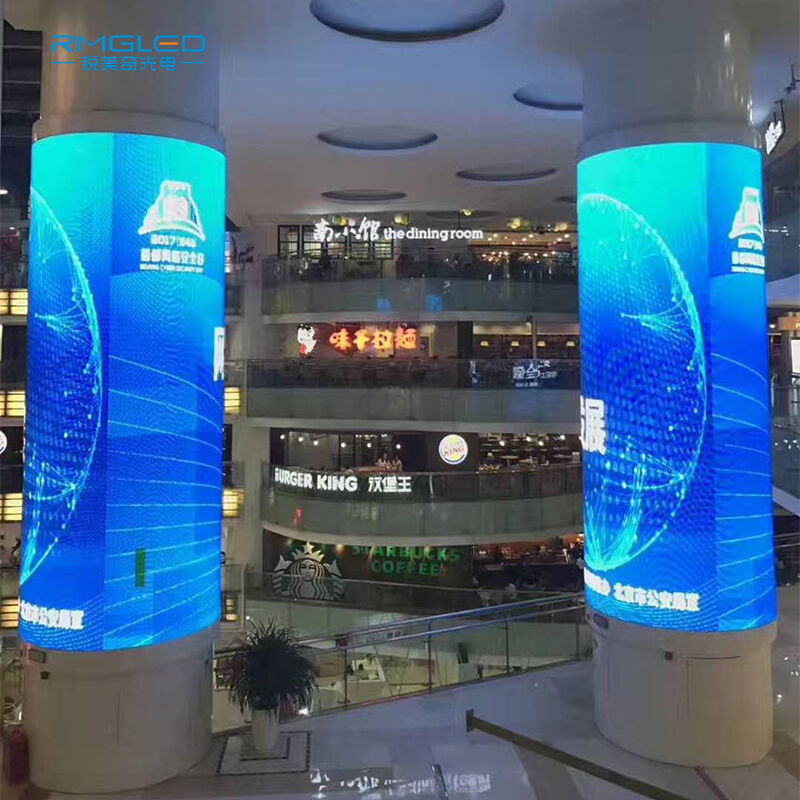
Decoding Front Versus Rear Service Maintenance Mechanics
Executing a targeted swap-out without scratching adjacent pixels depends heavily on whether the display utilizes front-service or rear-service engineering configurations. For tight indoor environments, retail backdrops, and wall-mounted setups where rear access is physically impossible, front-service designs are standard.
-
The Front-Service Approach: Field technicians utilize specialized vacuum-suction or heavy-duty magnetic tool matrices tailored to the exact dimensions of the led modules. Activating the tool creates an unyielding grip on the face of the module, allowing the operator to pop it straight out of the structural chassis without putting any mechanical stress on neighboring diodes.
-
The Rear-Service Approach: In outdoor billboards or staging environments with built-in maintenance catwalks, rear-service layouts are common. Here, technicians undo simple quick-turn locking mechanisms or structural retention screws from behind, pushing the module forward slightly to clear the frame before disconnecting internal links.
The Protocol of Hot Swapping and Signal Cascade Integrity
The absolute benchmark of a professional repair is the ability to complete the entire module exchange while the rest of the display continues to play high-definition content uninterrupted—a process known in engineering as hot-swapping. Achieving this requires strict adherence to signal cascade protocols.
| Technical Maintenance Variable | Non-Integrated Storage (Legacy Frameworks) | Smart Flash Integrated Module Architecture |
| Calibration Data Retrieval | Manual software uploading, high error risk | Automatic synchronization via smart flash memory |
| Color Uniformity (Chromaticity) | Visible "patchwork" effect across the screen | Flawless, pixel-by-pixel automated color match |
| Average Replacement Speed | 30 to 45 minutes per location | Under 3 minutes with plug-and-play tools |
When a damaged module is identified, the technician carefully disconnects the low-voltage DC power cabling and the high-speed data ribbon cables linking the unit to the regional hub or receiving card. Because quality display networks leverage loop-redundancy or intelligent daisy-chain data paths, cutting the data feed to one isolated module will not break the data stream to downstream segments. The receiving card automatically reroutes the backup signal within microseconds, keeping the rest of the screen alive while the new component is seamlessly anchored into the vacant slot.
Eliminating Pixel Chromaticity Shifts Post Module Replacement
A notorious headache that often plagues amateur maintenance teams is the appearance of a bright patch or a dark block right where the new component was installed. This occurs because different production batches of light-emitting diodes naturally possess slight variances in brightness and color wavelengths.
To resolve this issue, top-tier system layouts integrate small flash memory chips directly onto the PCB of individual led modules. This onboard memory stores the precise factory calibration profiles and pixel-by-pixel chromaticity coordinates. The moment the replacement module is plugged into the live receiving card, the control system reads the stored calibration data instantly. It automatically recalibrates the drive currents to match the exact brightness and color output of the older surrounding pixels, resulting in an entirely seamless visual field.
The Bottom Line Impact of Zero Downtime Engineering
From a cold corporate financial perspective, investing in highly serviceable modular architectures represents an exceptional risk-mitigation strategy that pays massive dividends across the operational lifecycle of a digital asset. The ultimate Total Cost of Ownership (TCO) of a display is determined by its long-term maintainability.
When a localized failure can be resolved in under three minutes by an on-site technician without specialized electrical engineering degrees, the reliance on expensive third-party service calls drops to zero. Furthermore, avoiding total screen shutdowns prevents contractual advertising penalties and safeguards brand reputation during high-profile public events. This level of serviceability transforms the display from a high-maintenance tech risk into a highly predictable, high-yield commercial asset built for decades of continuous operation.
Precision LED Architecture and Advanced Supply Chain Fulfillment
Successfully delivering and maintaining high-performance, large-scale display networks requires a manufacturing partner capable of enforcing absolute dimensional accuracy and batch consistency at the component level. RMG has carved out a premier international reputation by operating as an unyielding vanguard in this high-precision optoelectronic manufacturing sector. Specializing in the end-to-end engineering of advanced, high-refresh-rate led modules, the automated production facilities at RMG leverage state-of-the-art SMT (Surface Mount Technology) assembly lines, strict automated optical inspections (AOI), and comprehensive environmental aging protocols to guarantee every single component delivers zero-defect field performance.
Supported by an exceptionally robust international engineering supply chain infrastructure, RMG provides commercial clients, AV system integrators, and staging providers with tailored OEM/ODM customization, specialized smart-flash memory integration, and rapid bulk fulfillment services to major global ports. This deep commitment to engineering excellence ensures that whether an operator is outfitting a corporate boardroom or deploying an expansive outdoor advertising matrix, the modules arrive true, perfectly color-matched, and engineered for effortless, seamless maintenance across their entire operational journey.